
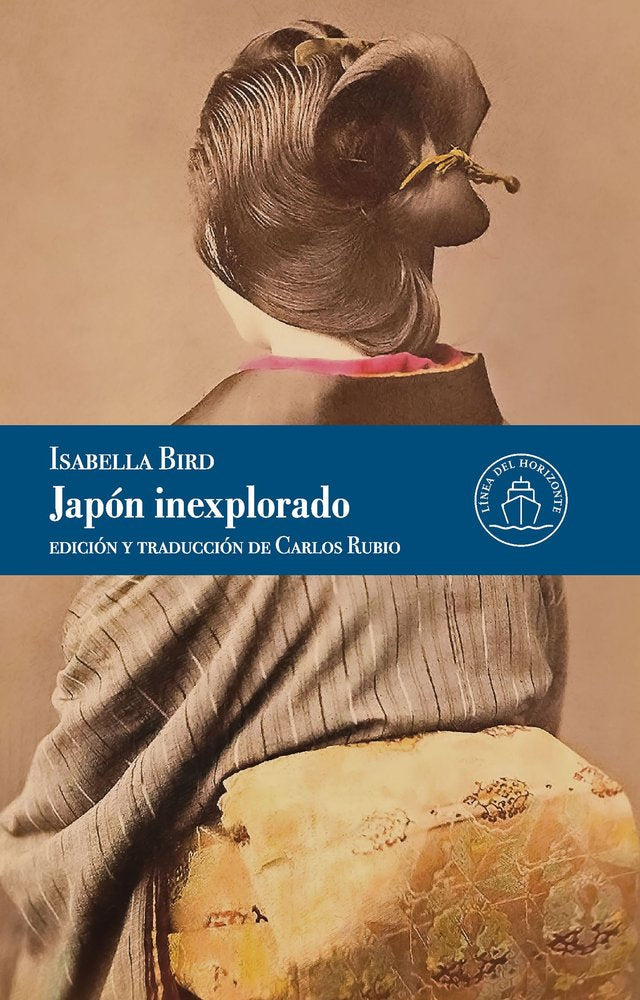

Description
UNEXPLORED JAPAN
Book Summary
In the second half of the 19th century, when Japan was still a territory largely forbidden to Westerners, Isabella Bird ventured alone into the north of the archipelago. This book captures her journey through remote regions, from lost villages to the island of Hokkaido, where she became one of the first Europeans to document the life of the Ainu people. On foot, on horseback, or in fragile boats, Bird navigates difficult paths and precarious lodgings with admirable curiosity and strength. The result is a classic of modern travel writing: a precise, vibrant, and non-exoticized account that restores wonder at a distinct and deeply human culture.
What is it about?
Isabella Bird, a tireless traveler and lucid observer, traverses rural and northern Japan at a time when the country was beginning to open itself to the world. The author does not seek out the great urban centers or well-known monuments, but rather the most secluded corners of the archipelago. She crosses rugged landscapes, stays in modest inns, and lives among communities that have had almost no contact with foreigners. Her gaze rests especially on the Ainu people, whose customs and way of life were practically unknown in Europe. Far from condescension or superficial exoticism, Bird describes with precision and empathy the difficulties of the journey, the hospitality of her hosts, and the beauty of a country that reveals itself before her eyes. The journey thus becomes a unique testament to resilience, curiosity, and the meeting of two worlds.
Main Themes
- Exploration and solo travel in the 19th century: the experience of a Western woman traveling through unknown territories.
- Cross-cultural encounter: the contact between the European traveler and rural Japanese communities, especially the Ainu people.
- Daily life in rural Japan: detailed description of customs, housing, food, and hospitality in remote villages.
- Resilience and adaptation: the author's ability to face adverse conditions with determination and clarity.
- An unbiased gaze: an early ethnographic approach, free of exoticism or condescension, that values shared humanity.
Who is it recommended for?
This book is aimed at readers interested in classic travel literature, the history of Japan during its opening to the world, and exploration narratives written by pioneering women. It will also be attractive to those looking for an early ethnographic perspective, far removed from conventional tourism, and to those who appreciate detailed accounts of remote cultures and landscapes. It is an ideal read for curious travelers, lovers of social history, and anyone who enjoys testimonies of resilience and personal discovery.
What this book offers
- A unique historical testimony on Japanese regions that were sparsely documented in the 19th century.
- A pioneering female perspective in travel literature, characterized by a lucid and empathetic gaze.
- An immersion into the Ainu culture and rural Japanese life of the Meiji era.
- A story of personal resilience that inspires through the author's strength and curiosity.
- A precise and vibrant narrative style that turns the travel experience into an absorbing read.
Technical Sheet
- Author: Bird, Isabella
- Publisher: La Linea del Horizonte Ediciones
- Language: Spanish
- Collection: Meridianos
- Binding: Paperback
- Publication Date: March 2026
- Number of pages: 336
- Weight: 828 g
Editorial Review
Unexplored Japan is a classic of the travel genre that retains its capacity to inspire wonder intact. The work stands out for Isabella Bird's sharp, unbiased gaze, as she manages to convey the harshness and beauty of her journey without falling into idealizations. Her account is especially valuable for the ethnographic documentation it offers on Ainu communities and remote villages, as well as for the portrait of a woman determined to explore territories forbidden to Westerners of her time. For the contemporary reader, the book provides not only a journey back in time, but also a reflection on the encounter between cultures and the power of human curiosity. A recommended read for those seeking historical depth and narrative authenticity.