

Description
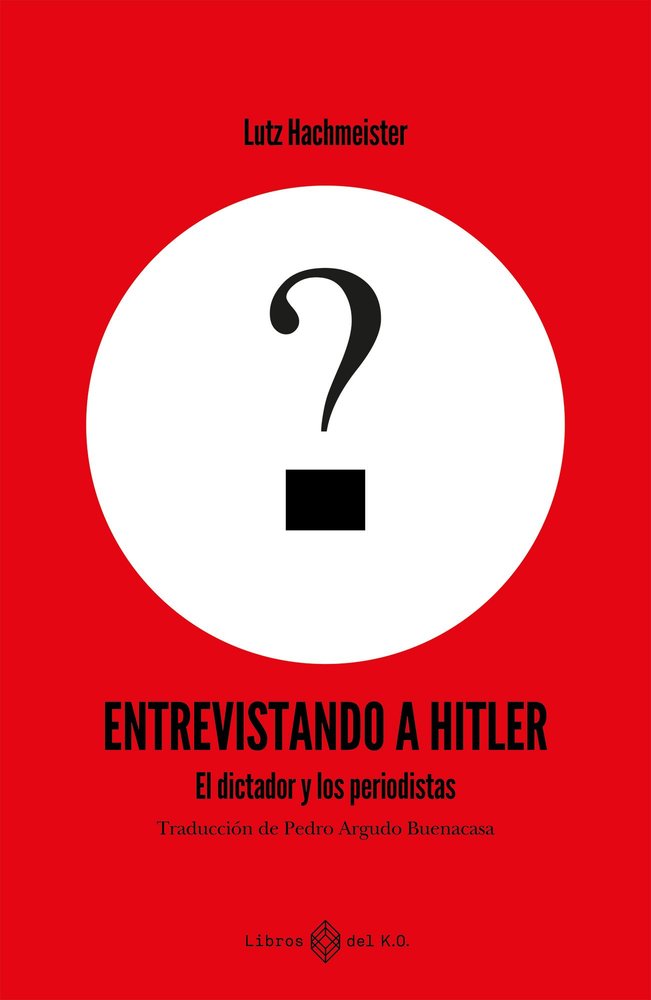
INTERVIEWING HITLER
Book Summary
An exhaustive and revealing investigation into the relationship between Adolf Hitler and the press of his time. Historian Lutz Hachmeister analyzes for the first time the complete history of the interviews granted by the dictator, debunking the image of a Hitler uncomfortable with journalists. Through original sources and archival material, the author exposes how most interviewers arrived ill-prepared, fascinated, or in search of notoriety, unknowingly contributing to the propaganda machinery of the Nazi regime. A work that connects those dynamics with modern-day interviews with autocrats, offering a contemporary perspective on the marketing of dictatorships.
What is it about?
The book reveals the surprising number of interviews that Adolf Hitler granted throughout his political career, despite his supposed discomfort with the format. Hachmeister demonstrates that the dictator had little to fear: the journalists who came to see him usually did so without preparation, without geopolitical knowledge, and without any intention of confrontation. Among them were many naive individuals, curious onlookers seeking spectacle, and ambitious people chasing a professional trophy. The work describes how Hitler sparked fascination in both the interviewers and an audience eager for sensationalism, and how these dynamics fueled a "propaganda dictatorship." The author also draws a parallel with the present, analyzing how dictators and autocrats are interviewed today, and what lessons we can learn from those encounters.
Main themes
- Analysis of the propaganda and marketing techniques of the Nazi regime through the press.
- Study of the relationship between Hitler and the national and international journalists who interviewed him.
- Critique of the lack of preparation and the complacency of the media in the face of authoritarian power.
- Historical comparison between interviews with Hitler and current dynamics with autocratic leaders.
- Research based on original sources and archival material regarding the dictator's encounters with the press.
Who is it recommended for?
This book is aimed at readers interested in the history of Nazism, World War II, and fascism, as well as professionals and students of journalism, political communication, and propaganda. It will also be of great value to those seeking to understand how the media can be instrumentalized by authoritarian regimes and how the public image of dictators is constructed. It is an ideal work for those who appreciate rigorous historical research and critical analysis of sources.
What this book offers
- A novel and well-documented perspective on the relationship between Hitler and the press, an underexplored aspect of Nazi history.
- A critical analysis of how sensationalism and a lack of journalistic rigor can serve the interests of authoritarian regimes.
- A contemporary reflection on interviews with dictators and autocrats, connecting the past with the present.
- Access to original sources and archival material that reveal unpublished details about the dictator's encounters with journalists.
- A deeper understanding of the marketing and propaganda techniques used by the Nazi regime to build its public image.
Technical data
- Author: HACHMEISTER, LUTZ
- Publisher: LIBROS DEL KO, SLL
- Language: Spanish
- Topic: REPORTAGE AND COLLECTION OF JOURNALISTIC ARTICLES, WORLD WAR II, FASCISM AND NAZISM, PRESS AND JOURNALISM
- Collection: NON-FICTION
- Binding: Paperback
- Publication date: November 2025
- Number of pages: 450
- Weight: 1084 g
Editorial Review
A reference work for understanding a key aspect of Nazi propaganda through an original and rigorous approach. Hachmeister not only accurately documents Hitler's encounters with the press but also offers a critical analysis that invites reflection on the role of the media in the face of authoritarian power. Its connection to the present adds a layer of relevance that makes it essential reading for historians, journalists, and any reader interested in the mechanisms of propaganda and political communication.