

Description
The Algorithmic Invasion
Book Summary
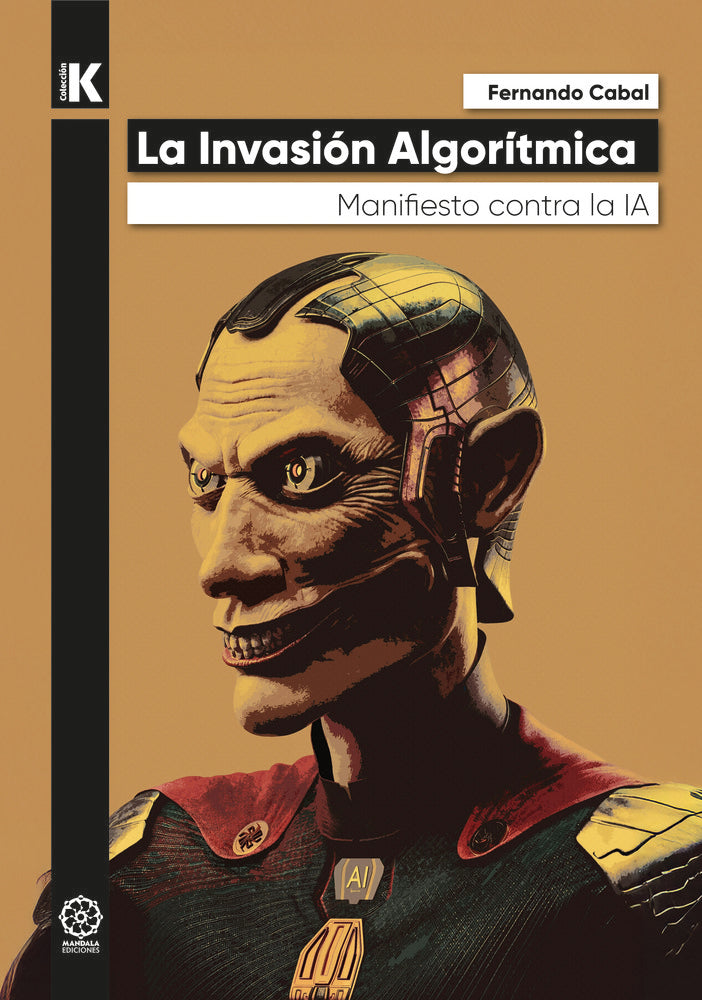
A critical essay that dismantles the promises of artificial intelligence to reveal its true function in contemporary society. Fernando Cabal analyzes how AI does not liberate us, but rather integrates us into a more efficient system of control and calculation. The author warns of the transformation of the human being into a caricature of themselves, modeled by algorithms that ignore the soul, desire, and freedom. An essential text for those who want to understand the real risks of a technology that, far from being neutral, serves interests of power and economic concentration.
What is it about?
The book proposes ten provocative theses that question the dominant narrative regarding artificial intelligence. Cabal maintains that AI is not coming to liberate human beings, but to integrate them into a more efficient machinery of control and obedience. The promise of increased freedom is, according to the author, a self-serving illusion.
The work analyzes how AI does not replace the human being, but transforms them into a degraded version of themselves, shaped by algorithms that are ignorant of consciousness, desire, and freedom. The real danger is not that the machine becomes like a human, but that the human becomes increasingly like the machine.
Cabal warns that every advance in artificial intelligence under capitalism represents a regression in justice, community, and freedom. AI is not imposed on its own: it arrives in the service of the same interests that already concentrate power. The book also addresses how this technology is atrophying the cognitive capacities of new generations, replacing reflection with immediate response and thought with prediction. Finally, he denounces that the rise of digital crime empowered by AI is not a side effect, but a direct consequence of the techno-capitalist model.
Main Topics
- Critique of the emancipatory discourse of artificial intelligence
- Relationship between technology, capitalism, and the concentration of power
- Transformation of human subjectivity by algorithms
- Cognitive atrophy and loss of reflective capacities in new generations
- Digital crime as a structural consequence of the techno-capitalist model
Who is it recommended for?
This book is aimed at readers interested in critical thinking about technology, especially those who are wary of the optimistic and uncritical discourse surrounding artificial intelligence. It is suitable for professionals in philosophy, sociology, computer science, and political science, as well as anyone concerned about the social and ethical impact of technology on daily life. It will also be of interest to students and teachers looking for materials to debate the future of digital society.
What this book offers
- A critical and grounded perspective on artificial intelligence, far from commercial technological optimism
- Conceptual tools to identify the power interests that underlie the development of AI
- A documented warning about the cognitive deterioration that algorithmic technology causes in new generations
- Keys to understanding the relationship between capitalism, technology, and social control
- An analytical framework for understanding digital crime as a structural consequence, not an accident
Technical Specifications
- Author: Cabal, Fernando
- Publisher: Mandala Ediciones
- Language: Spanish
- Subject: Social issues and processes, ethical and social aspects of computing, artificial intelligence
- Collection: K
- Binding: Paperback
- Publication date: January 2026
- Number of pages: 290
- Weight: 300 g
Editorial Review
An uncomfortable and necessary essay that dares to question the dominant narrative about artificial intelligence. Fernando Cabal offers a lucid and well-argued vision of the real risks involved in surrendering our autonomy to code. His critical approach, far from gratuitous catastrophism, provides essential analytical tools for any reader who wants to understand the social, ethical, and political implications of algorithmic technology. A work that invites reflection and debate at a time when AI is advancing without sufficient critical counterweight.