

Description
GRAPHIC FOSSILS
Book summary
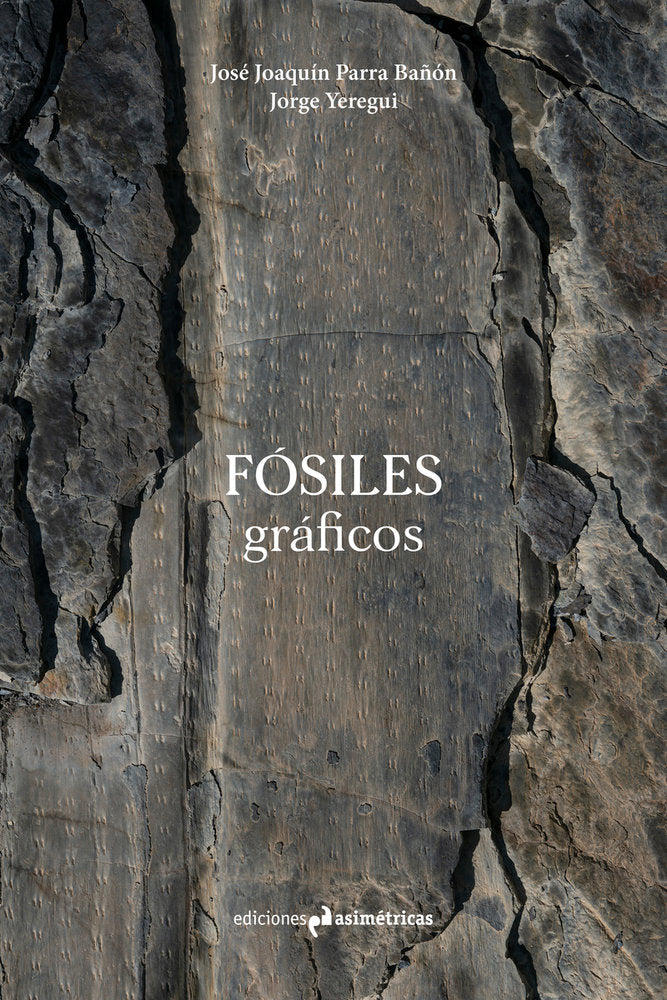
Graphic Fossils is a work that explores the intersection between drawing, geology, and photography. Through a series of pencil drawings and twenty-two photographs by Jorge Yeregui taken at the Gran Corta de Fabero, the book proposes a reflection on nature as a creator of graphic signs. The reader will find a visual and textual essay that investigates the idea of the fossil as an anonymous paleodrawing, traced by the earth itself over millennia. It is a work that invites us to observe the coexistence of the mineral and the vegetal with care, and to discover in geological forms a graphic structure laden with meaning.
What is it about?
The work starts from the premise that fossils can be read as natural drawings, created without artistic intentionality by geology itself. The authors, José Joaquín Parra Bañón and Jorge Yeregui Tejedo, develop this graphic hypothesis through two languages: pencil drawing and photography. Yeregui's images, captured at the Fabero mine, show fossils that are interpreted by Parra Bañón as graphic constructions composed of lines, stains, textures, and fractures. The text analyzes these forms as graphic episodes where the inorganic and the organic, the remote and the future, are intertwined. The book is presented as an album that orbits around the oxymoron of the natural drawing, questioning nature's capacity to express itself through signs that it builds itself with the slowness of millennia.
Main themes
- The interpretation of fossils as natural drawings and anonymous paleodrawings.
- The relationship between the mineral and the vegetal, and the connection between the inorganic and the organic.
- The analysis of geological forms as graphic structures: lines, stains, textures, fractures, and curves.
- Photography as a tool for documenting and reinterpreting geological features.
- The notion of "antigraphy" and the exploration of syntactic abstraction in drawing.
Who is it recommended for?
This book is aimed at photographers, visual artists, geologists, art historians, and readers interested in the intersection between science and art. It is also recommended for those seeking a philosophical reflection on nature as a creator of images and signs. It is an ideal work for those who appreciate graphic experimentation, landscape photography, and visual poetry.
What this book contributes
- An innovative perspective that fuses geology with the theory of drawing and photography.
- A series of twenty-two photographs of fossils from the Gran Corta de Fabero, which function as both a visual document and an artistic work.
- A detailed analysis of geological forms as graphic structures, offering a new way of looking at fossils.
- A reflection on the unconscious creativity of nature and its capacity to generate signs.
Technical specifications
- Author: PARRA BAÑÓN, JOSE JOAQUIN; YEREGUI TEJEDO
- Publisher: EDICIONES ASIMETRICAS, S.L
- Language: Spanish
- Subject: PHOTOGRAPHY AND PHOTOGRAPHERS, PHOTOGRAPHERS, PHOTOGRAPHS: COLLECTIONS, PHOTOGRAPHS: PORTRAITS, PHOTOJOURNALISM, EROTIC AND NUDE PHOTOGRAPHY, AERIAL PHOTOGRAPHY, GEOLOGY AND THE LITHOSPHERE
- Collection: PHOTOGRAPHY
- Binding: Paperback
- Publication date: February 2026
- Number of pages: 72
- Weight: 100 g
Editorial review
Graphic Fossils is a unique editorial proposal that combines the precision of geological analysis with the freedom of artistic interpretation. The work stands out for its interdisciplinary approach, capable of interesting both photography professionals and science lovers. The collaboration between Parra Bañón and Yeregui Tejedo achieves a coherent dialogue between text and image, where the photography is not a mere supplement but an essential part of the discourse. The book, with its manageable format and careful editing, offers a slow and reflective reading experience, ideal for those seeking content that challenges the boundaries between disciplines. Its main value lies in the originality of its thesis and the quality of the images that support it.