
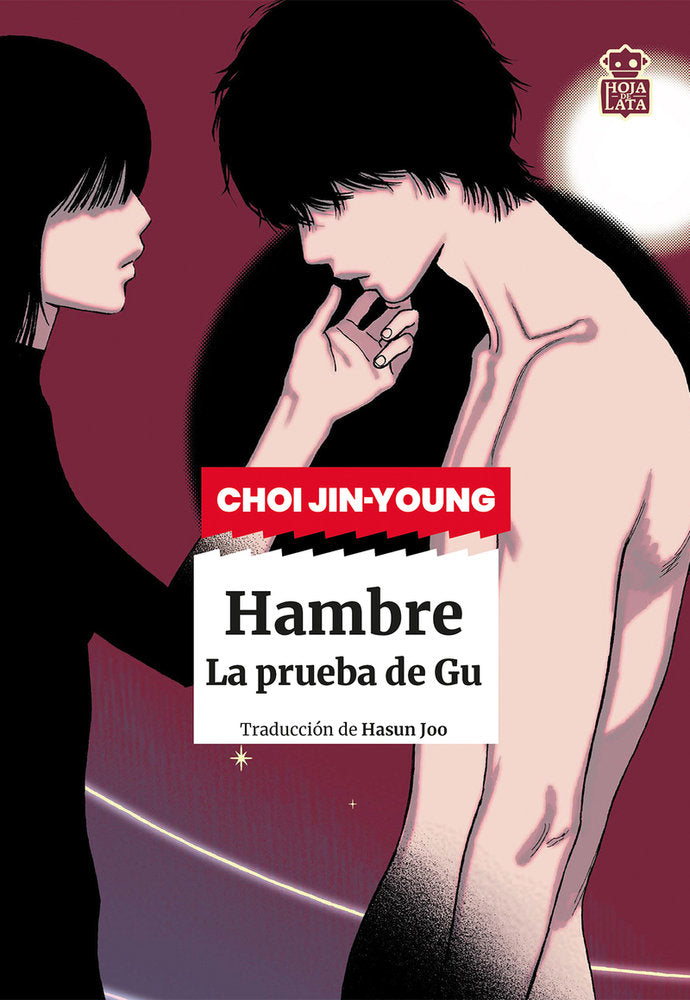

Description
HUNGER
Book Summary
In a Seoul marked by ruthless competition and social pressure, Dam and Gu try to survive as two young lovers. When Gu is murdered by debt collectors, Dam makes an extreme decision: to refuse to let his body be profaned by a system that already squeezed him dry while he was alive. Thus begins a disturbing ritual of love and resistance, where devouring the corpse of the beloved becomes the final act of protection. Hunger is a literary phenomenon in South Korea that explores the limits of love, debt, and dehumanization in contemporary society.
What is it about?
The novel tells the story of Dam and Gu, two twenty-somethings who love each other in the midst of an implacable South Korean society, where strict education and fierce competition mark every stage of life. After witnessing Gu’s murder at the hands of debt collectors, Dam refuses to hand over his body to those she considers his enemies. In a desperate act of love and rebellion, she takes him home, washes him with care, and begins to devour him piece by piece. Through this barbaric ritual, Dam seeks to bury her beloved within herself, preserving him from a world that only knew how to exploit him. The work is a visceral reflection on love, money, and the structural violence that consumes the younger generations.
Main Themes
- Extreme love as a form of resistance against social and economic oppression.
- A critique of South Korean debt culture and dehumanizing competition.
- Grief and the transformation of the beloved’s body into a symbol of protection and memory.
- The systemic violence suffered by young people in hyper-capitalist societies.
- Cannibalism as a metaphor for absolute devotion and the denial of loss.
Who is it recommended for?
This work is aimed at readers interested in contemporary Korean narrative, extreme realism, and literary explorations of love, death, and social criticism. It is ideal for those seeking disturbing and poetic stories that challenge moral boundaries, as well as for those who have enjoyed authors such as Han Kang or novels that address structural violence from an intimate and visceral perspective.
What this book offers
- A unique perspective on love and sacrifice, taken to a literary extreme that invites reflection.
- A deep and moving critique of the economic and social pressures faced by young people in South Korea.
- An intense and disturbing reading experience that combines poetry, horror, and social commentary.
- An intimate portrait of desperation and resistance that connects with universal concerns about debt and dignity.
Technical Details
- Author: Jin-Young, Choi
- Publisher: Hoja de Lata Editorial
- Language: Spanish
- Subject: Modern and contemporary fiction
- Collection: Sensibles a las letras
- Binding: Paperback
- Publication date: February 2026
- Number of pages: 192
- Weight: 468 g
Editorial Review
Hunger presents itself as a shocking and necessary work within contemporary South Korean literature. Its narrative proposal, which fuses horror with a poetic sensibility, manages to challenge the reader on themes such as love, debt, and dehumanization. The novel has not only resonated with hundreds of thousands of readers in South Korea, but also offers a raw and authentic look at the tensions of a society that demands everything in exchange for nothing. Recommended for those looking for a read that does not leave one indifferent and that transcends the conventional boundaries of fiction.