
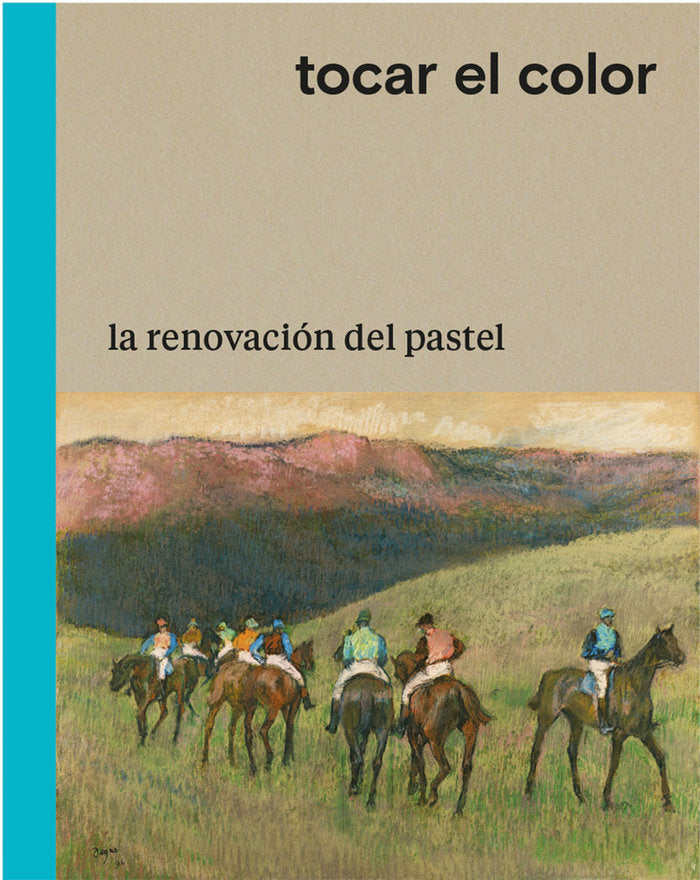

Description
Touching Color. The Pastel Renaissance
Book Summary
This exhibition catalogue explores the rebirth of pastel as an autonomous artistic technique during the 19th century, challenging its consideration as a mere preparatory tool. Through an international perspective, the work analyzes how the unique qualities of pastel—intense colors, agile execution, and ease of handling—connected with emerging modernity. The reader will discover the key episodes and most prominent figures who elevated this technique to the category of art in its own right, complemented by a careful selection of works that illustrate its evolution.
What is it about?
Although the 18th century is known as the golden age of pastel, it was during the 19th century that this technique achieved its autonomy from oil painting. The book examines this process of emancipation from an international viewpoint, highlighting how the material's properties—such as its blurred appearance and capacity to generate vibrant colors—aligned with a new conception of artistic modernity. The exhibition covers the main milestones of this renewal, highlighting the artists who transformed pastel into an independent and fully recognized form of expression.
Main themes
- Renewal of pastel in the 19th century as an autonomous artistic technique.
- Evolution of the pastel technique from the 18th century to its modern consolidation.
- Relationship between the qualities of pastel (color, blurring, agility) and artistic modernity.
- Key figures and historical episodes in the international rebirth of pastel.
- Cataloging and analysis of representative works from the exhibition.
Who is it recommended for?
This book is aimed at art lovers, art history students, collectors, and professionals in the cultural sector interested in the evolution of pictorial techniques. It will also be of great value to those who wish to delve into the transition period between the 18th century and modernity, as well as those seeking an international and rigorous vision of pastel as an independent artistic medium.
What this book offers
- A complete and documented vision of the rebirth of pastel in the 19th century, going beyond the traditional focus on the 18th century.
- Detailed analysis of the technical qualities of pastel and its link to artistic modernity.
- International historical and artistic context that allows for an understanding of the evolution of this technique.
- Identification of the artists and key episodes that consolidated pastel as an autonomous art form.
- Quality visual material from a landmark exhibition.
Technical specifications
- Author: Cécile Gombau, Carlos Martín, Stéphanie Prenant, Saunier
- Publisher: Fundación Mapfre
- Language: Catalan
- Topic: Painting and paintings, exhibition catalogues and specific collections
- Collection: Exhibition catalogue
- Binding: Hardcover
- Date of publication: February 2020
- Number of pages: 256
- Weight: 1055 g
Editorial review
This catalogue offers a rigorous and necessary contribution to understanding the transformation of pastel in the 19th century, a period often eclipsed by the splendor of the 18th century. The international perspective and the focus on the technical autonomy of pastel make it a reference work for both specialists and art enthusiasts. Its careful editing and the quality of the reproductions make it especially attractive for those seeking a profound and visually rich study on this technique.