
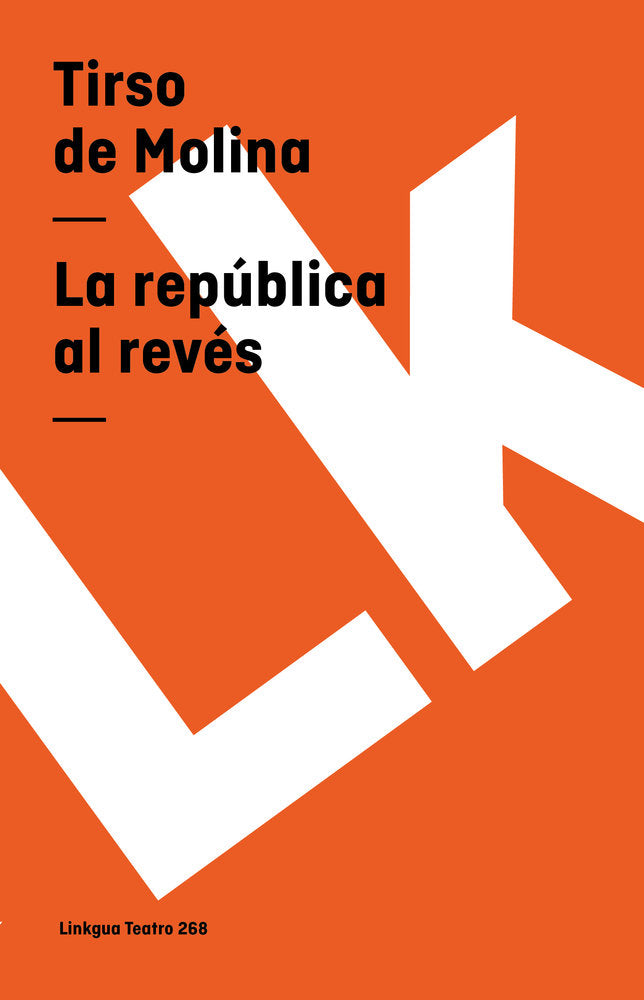

Description
The Republic Upside Down
Book Summary
This work by Tirso de Molina offers a profound reflection on power, political morality, and the social structures of the Spanish Golden Age. Through the conflict between Irene, an empress who sees her authority threatened, and her son Constantine, the author explores the tensions of leadership, generational transition, and gender norms. The reader will encounter a drama of political intrigue and ethical dilemmas, presented with penetrating dialogues that question the foundations of authority and justice, making the work an incisive analysis of the human condition.
What is it about?
The Republic Upside Down begins with Irene, armed with a staff and imperial crown, leading an army and expecting a triumphal reception in Constantinople. However, she discovers that her power is being transferred to her son, Constantine. This shift triggers an internal and moral conflict between the two characters. Irene feels betrayed, while Constantine argues that his time to rule has come, challenging social expectations and gender norms. Through their dialogues, the play explores struggles over legacy, responsibility, and justice, going beyond family drama to question power structures in society, including the role of the Mercedarian Order in social and political morality.
Main Themes
- The transition of power and generational conflict between rulers.
- Gender norms and social expectations regarding female leadership.
- Political morality and ethics in the exercise of authority.
- The struggle between family duty and state responsibilities.
- Critique of power structures and social justice through the Mercedarian Order.
Who is this recommended for?
This work is recommended for readers interested in Spanish Golden Age classical theater, especially the work of Tirso de Molina. It is also ideal for students and scholars of literature looking to analyze dramas of power, moral conflicts, and social criticism. Likewise, it will appeal to those who enjoy plots of political intrigue and reflections on leadership and ethics.
What this book offers
- A critical and deep vision of the dynamics of power and authority in society.
- Intense dialogues that invite reflection on morality and justice.
- An analysis of gender norms through a strong and complex female character.
- A representative work of Tirso de Molina's theater, with his characteristic psychological and social acuity.
Technical Sheet
- Author: de Molina, Tirso
- Publisher: Linkgua Ediciones
- Language: Spanish
- Subject: CLASSICAL TEXTS, PLAYS, THEATRICAL TEXTS
- Collection: THEATER
- Binding: Paperback
- Publication Date: September 2005
- Number of pages: 140
- Weight: 175 g
Editorial Review
The Republic Upside Down is a work that stands out for its ability to combine family drama with profound social and political criticism. Tirso de Molina manages to create complex characters and dialogues that transcend their historical context, offering a timeless reflection on power and ethics. This edition from Linkgua Ediciones, part of their theater collection, presents the text in an accessible way, making it a valuable acquisition both for fans of classical theater and for academics seeking a work that invites analysis and discussion.