

Description
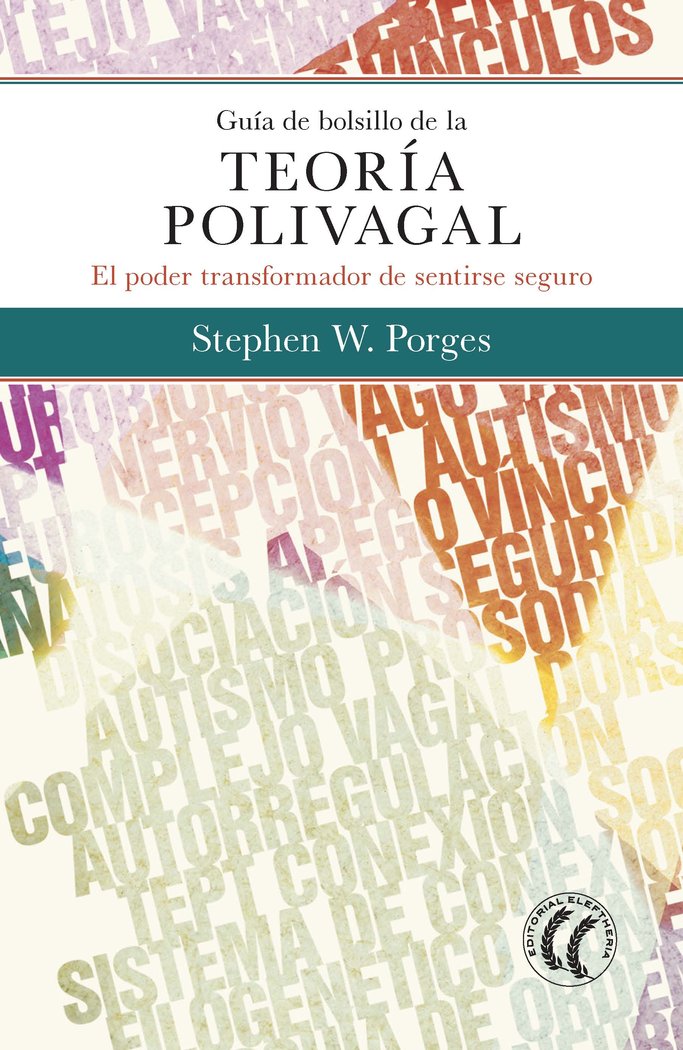
Pocket Guide to the Polyvagal Theory
Book Summary
This work is an accessible and practical version of Stephen W. Porges's groundbreaking polyvagal theory. The reader will find a clear explanation of how the autonomic nervous system influences our behavior, emotions, and relationships. The book's primary value lies in offering tools to understand the neurobiology underlying issues such as anxiety, trauma, or difficulty connecting with others, providing a roadmap for healing and well-being in both personal life and clinical practice.
What is it about?
The book breaks down the fundamental concepts of the polyvagal theory, developed by neuroscientist Stephen Porges. This theory explains how the vagus nerve and its two main branches (the ventral and the dorsal) regulate our responses to the environment: from safety and social connection (social engagement system) to fight or flight and immobilization (shutdown).
Through clear language and everyday examples, the guide shows how our nervous system constantly interprets signals of safety or danger in the environment and in relationships. It explores the implications of this theory for understanding disorders such as anxiety, depression, autism, or the consequences of trauma. Finally, it offers practical applications for clinicians and anyone interested in regulating their nervous system and improving their quality of life.
Main Topics
- Physiology of the autonomic nervous system and the vagus nerve.
- The hierarchy of responses: safety, mobilization (fight/flight), and immobilization.
- The role of the social engagement system in interpersonal connection.
- Neuroception: the unconscious detection of safety and danger.
- Implications of the polyvagal theory for trauma, anxiety, and autism spectrum disorders.
- Practical applications for emotional regulation and psychotherapy.
Who is it recommended for?
This book is aimed at psychologists, psychiatrists, occupational therapists, and other mental health professionals looking for an up-to-date neurobiological framework for their clinical practice. It is also highly recommended for students of psychology or neuroscience, as well as anyone interested in understanding the connection between their body, their emotions, and their relationships from a scientific and accessible perspective.
What this book offers
- A clear and deep understanding of the polyvagal theory, a cutting-edge scientific model of the nervous system.
- Practical tools to identify and regulate one's own autonomic state, improving stress and anxiety management.
- A new perspective to understand complex human behaviors, such as social disconnection or traumatic reactions, from their biological basis.
- Language and concepts directly applicable to clinical practice to enrich therapeutic intervention.
- A solid foundation for improving the quality of interpersonal relationships by understanding the neurobiology of social connection.
Technical Specifications
- Author: Porges, Stephen W.
- Publisher: EDITORIAL ELEFTHERIA SL
- Language: Spanish
- Subject: MEDICINE: GENERAL ISSUES, NEUROLOGY AND CLINICAL NEUROPHYSIOLOGY, CLINICAL PSYCHOLOGY, NEUROSCIENCES, SELF-HELP AND PERSONAL DEVELOPMENT
- Collection: SELF-HELP
- Binding: Other
- Publication date: June 2018
- Number of pages: 214
- Weight: 456 g
Editorial Review
This pocket guide represents an excellent bridge between high-level neuroscientific research and its practical application. Stephen Porges manages to distill the complexity of his theory into an accessible text without losing rigor. For the mental health professional, it offers a conceptual framework that can transform the understanding of patients and enrich intervention strategies. For the general reader, it provides valuable and empowering knowledge about the functioning of their own nervous system, with direct applications for daily well-being. It is, without a doubt, essential reading for those who wish to understand the biology of human connection and emotional regulation.