
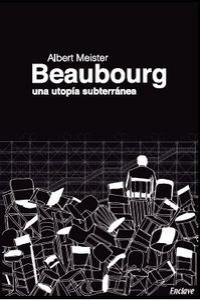

Description
Beaubourg
Book Summary
A work that combines sociology, fiction, and political thought to narrate the imaginary occupation of the underground levels of the Pompidou Centre in Paris. Albert Meister, a libertarian sociologist, constructs a utopian chronicle that spans fourteen years, beginning with the inauguration of the iconic cultural center in 1976. The reader will discover an experiment in radical self-management, a space of unusual freedom that challenges official definitions of culture and power, eventually spilling over to influence the surrounding reality.
What is it about?
On December 15, 1976, as the Centre Pompidou is inaugurated as a symbol of institutional culture, a parallel space is occupied: eighty-four floors located beneath the official center. This subterranean territory, dubbed Beaubourg, becomes the stage for a lived utopia. Albert Meister, with his background as a sociologist and scholar of self-managed communities, weaves a detailed chronicle of how the occupants build an alternative system of social, cultural, and political organization. Over the course of fourteen years, this space of freedom expands and influences the society outside, raising essential questions about power, culture, and the capacity for self-organization.
Main themes
- Utopia and self-management as alternative models of social organization.
- Critique of official cultural institutions and their definition of culture.
- Individual and collective freedom in spaces of resistance.
- Sociology of action and social change from the grassroots.
- Relationship between power, urban space, and cultural creation.
Who is it recommended for?
For readers interested in sociology, anthropology, and critical political thought, especially those seeking fiction with a solid theoretical foundation. Also for those who enjoy utopian and dystopian literature, as well as narratives exploring models of self-managed communities. It is an ideal work for social science students, activists, and anyone curious about alternatives to the established order.
What this book offers
- A profound reflection on culture as a living practice rather than an institutional imposition.
- An exercise in sociological imagination that connects theory and narrative.
- An exploration of the limits and possibilities of self-management and collective freedom.
- A unique perspective on a key historical moment, the inauguration of the Centre Pompidou, from an alternative viewpoint.
Technical specifications
- Author: Meister, Albert
- Publisher: Enclave de Libros Ediciones
- Language: Spanish
- Subject: Literature and literary studies, modern and contemporary fiction, society and culture, sociology and anthropology, social services and welfare, criminology, politics and government
- Collection: CASA DE FIERAS
- Binding: Paperback
- Publication date: May 2014
- Number of pages: 298
- Weight: 274 g
Editorial review
Beaubourg is a unique work that transcends conventional genres, combining the rigor of sociological analysis with the freedom of speculative fiction. Albert Meister succeeds in constructing a narrative that not only entertains but invites readers to rethink concepts such as culture, power, and community. His utopian approach, far from being naive, offers a lucid and well-documented critique of contemporary social structures. Recommended for those looking for a read that stimulates critical thinking and political imagination.