

Description
The Commentaries of David Kimhi
Book Summary
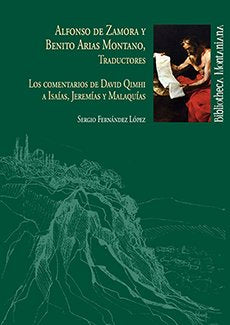
This work offers a critical edition of the biblical commentaries of Rabbi David Kimhi, translated into Spanish by two key figures of Hispanic humanism: Alfonso de Zamora and Benito Arias Montano. The reader will find a philological analysis of the Scriptures from the perspective of medieval Hebrew exegesis, presented through the literal translations these scholars made of Kimhi's treatises. It is a fundamental contribution to understanding the transmission of biblical knowledge during the Spanish Renaissance and the work of the Hebraists of the School of Alcalá.
What is it about?
The volume focuses on the recovery and study of the Spanish translations of the biblical commentaries of David Kimhi, an influential 13th-century Sephardic rabbi and grammarian. Alfonso de Zamora, a professor of Hebrew at the University of Alcalá and a central figure in the defense of philological exegesis, literally translated several of Kimhi's works, including his famous dictionary Book of Roots and his commentaries on numerous books of the Bible. Subsequently, Benito Arias Montano continued this work, translating various treatises by the same rabbi into Spanish. The monograph edits and analyzes these texts, showing how both humanists used the rabbinic tradition to delve into the literal and grammatical understanding of the Scriptures, within the context of Christian humanism and the religious polemics of the 16th century.
Main Topics
- Philological and grammatical biblical exegesis in the Renaissance.
- Translation and transmission of medieval rabbinic literature into Spanish.
- The figure of David Kimhi as a grammarian and biblical commentator.
- The Hebraist work of Alfonso de Zamora and his influence on Arias Montano.
- The School of Alcalá and Spanish biblical humanism of the 16th century.
- Critical edition of Hebrew texts translated into Spanish.
Who is it recommended for?
This book is intended for researchers, philologists, literary historians, and theologians interested in biblical exegesis, Renaissance humanism, and the history of translation. It will also be of great value to specialists in Hebrew and Sephardic studies, as well as advanced readers who wish to know the sources of biblical textual criticism in the context of 16th-century Spain. It is an essential academic reference work for those studying the work of Benito Arias Montano and Alfonso de Zamora.
What this book provides
- Access to the edition of unpublished or little-known texts of the Hebrew exegetical tradition translated into Spanish.
- Detailed understanding of the philological methodology employed by Spanish humanists in the study of the Bible.
- Historical and intellectual contextualization of the work of two key figures of Hispanic biblical humanism.
- First-hand material for the study of the influence of rabbinic exegesis on Renaissance Christian thought.
- A reference tool for research in the history of language, translation, and textual criticism.
Technical Specifications
- Author: Arias Montano, Benito; De Zamora, Alfonso
- Publisher: University of Huelva
- Language: Spanish
- Topic: LITERATURE: HISTORY AND CRITICISM, LITERARY STUDIES: C. 1500-C. 1800
- Collection: BIBLIOTHECA MONTANIANA
- Binding: Paperback
- Publication Date: 1111120
- Number of pages: 540
- Weight: 1335 g
Editorial Review
This is a highly rigorous academic edition that recovers an essential link in the history of biblical exegesis in Spain. The work is especially valuable for making the translations of Kimhi by two of the most prominent Hebraists of Hispanic humanism available to the specialized reader, showing the continuity and intellectual dialogue between Alfonso de Zamora and Arias Montano. Its main interest lies in its documentary and philological contribution, making it an obligatory reference for scholars of the period, although its technical density makes it less accessible to a general, non-specialized public.