
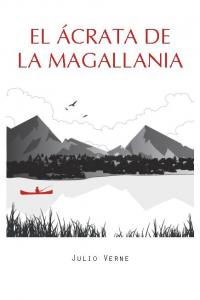

Description
The Anarchist of Magallania
Book Summary
This unpublished work by Jules Verne, published posthumously, serves as his human and political testament. Far from the modified version that circulated for decades under the title "The Survivors of the Jonathan," this original text recovers the author's authentic vision: a reflection on society, freedom, and human nature. Set in the southern territories of Patagonia, the novel combines classic Vernian adventure with a profound exploration of non-violent anarchism and the search for an alternative social model. Here, the reader will encounter the pen of a mature Verne, melancholic and fascinated by the possibility of a stateless community.
What is it about?
The narrative follows a group of castaways who arrive on the shores of Tierra del Fuego, at the southern tip of the American continent. There, in the inhospitable region of Magallania, they attempt to build a new society from scratch. The protagonist, a man of anarchist ideals, becomes the moral and political hub of the colony. Faced with the temptations of power, property, and hierarchy, he defends a model of coexistence based on voluntary cooperation and absolute respect for individual freedom. The plot unfolds between the struggle for survival in a wild environment and the ideological conflict between different ways of organizing communal life. Verne displays his talent for describing icy landscapes, storms, and southern fauna, while simultaneously questioning the foundations of the social order.
Main themes
- Non-violent anarchism and the critique of the State as a model of social organization.
- Utopia and the construction of an ideal community in a virgin territory.
- Individual freedom versus collective impositions and laws.
- The relationship between human beings and wild, extreme nature.
- Verne's maturity and disillusionment with progress and civilization.
Who is it recommended for?
For readers interested in the lesser-known work of Jules Verne, especially those looking for his more reflective and philosophical texts. It is also for those who appreciate adventure literature with a political and social backdrop, as well as for scholars of anarchist thought and 19th-century literary utopias. It is an essential read to complete the vision of the author beyond his scientific anticipation novels.
What this book offers
- Access to the original and previously unpublished version in Spanish of a novel that was censored and modified by the author's son.
- A unique perspective on the political thought of Jules Verne in his final years, far removed from the simplified image of an adventure writer.
- A deep reflection on freedom, power, and the possibility of a society without coercion.
- Verne's descriptive and poetic prose applied to the most extreme landscapes on the planet.
Technical specifications
- Author: Jules Verne
- Publisher: ERASMUS EDICIONES
- Language: Spanish
- Subject: Classic texts, modern and contemporary fiction, classic fiction, adventure
- Collection: Classics in the Present
- Binding: Paperback
- Edition date: November 2011
- Number of pages: 216
- Weight: 386 g
Editorial review
This edition recovers a fundamental text for understanding the intellectual evolution of Jules Verne. In contrast to the adulterated version known for decades, "The Anarchist of Magallania" offers the reader the opportunity to access the work as its author conceived it: an adventure story that is, at the same time, an essay on freedom and social organization. Its interest lies as much in the literary value of Vernian prose as in its relevance as a historical document of 19th-century utopian thought. A reading that invites reflection and broadens the horizon of the work of one of the fathers of science fiction.