
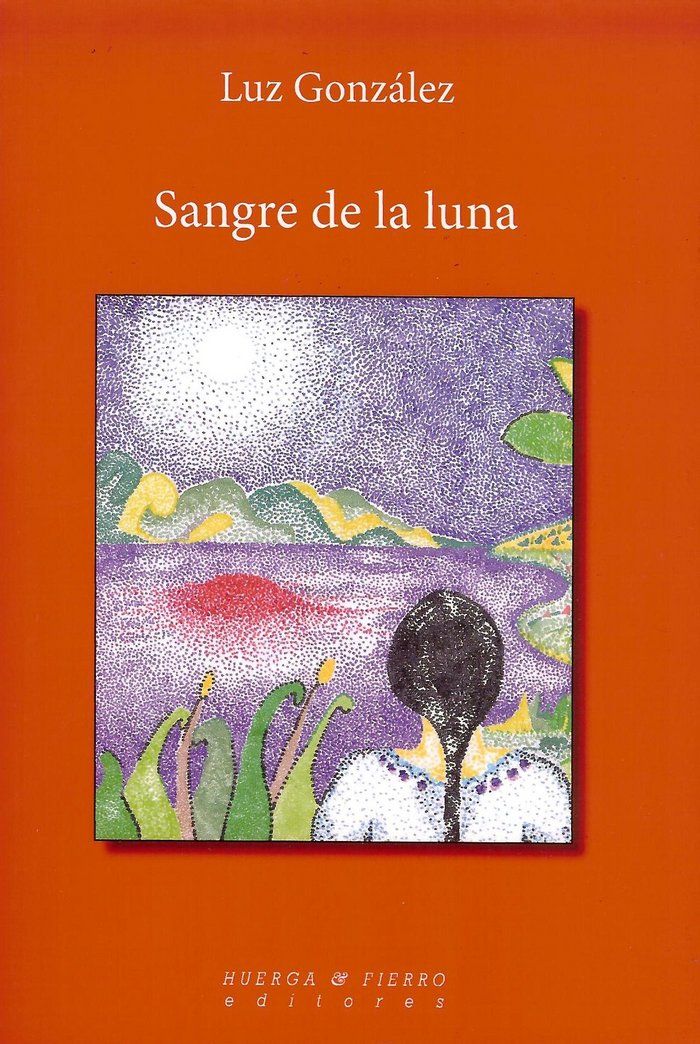

Description
Moon Blood
Book Summary
A Latin American guerrilla fighter discovers that the armed struggle has betrayed her ideals. In her flight forward, contact with an indigenous shaman and the ancestral wisdom of his people reveal an unexpected path: non-violence as the only solution. After obtaining asylum in Madrid, a group of women helps her give a name to her intuitions through Jungian myths and lunar mysteries. However, true peace will not come through intellectual knowledge, but by undertaking a journey back to her roots to heal her country from a new consciousness.
What is it about?
The novel chronicles the physical and spiritual journey of a woman who left her life to join a guerrilla group, only to face a ruthless reality where drug trafficking, ecological devastation, and machismo have corrupted the original cause. In the jungle, an old shaman plants in her the seed of an ancient wisdom that clashes with the violence of the armed group. Forced to flee, she gains asylum in Madrid, where the solidarity of a circle of women offers her a new language to understand her experiences through tales of the moon and Jungian archetypes. But true transformation is only completed when the protagonist decides to return symbolically to her ancestors, integrating both teachings to contribute to the healing of her land from a perspective of peace and self-knowledge.
Main themes
- The disillusionment with revolutionary ideals in the face of internal corruption within the guerrilla.
- The conflict between political violence and indigenous ancestral wisdom as a form of resistance.
- Drug trafficking and ecological damage as collateral consequences of armed struggle.
- Structural machismo within liberation movements.
- The search for female identity through lunar myths and Jungian psychology.
- Exile and the construction of a new life in Spain as a process of personal healing.
- The journey back to one's roots as a path toward inner peace and transformative action.
Who is it recommended for?
For readers interested in contemporary fiction with a strong social and political charge, especially those that explore the reality of armed conflicts in Latin America from a feminine perspective. It is also an ideal work for those looking for plots that integrate indigenous spirituality, analytical psychology (Jungian archetypes), and the experience of exile, as well as for readers who value stories of female empowerment and personal reconciliation.
What this book offers
- A critical and nuanced look at the disenchantment with guerrilla movements, far from idealizations.
- A reflection on the power of ancestral wisdom and non-violence as real alternatives to conflict.
- The exploration of female identity through universal myths and sisterhood in exile.
- A narrative that connects political struggle with a spiritual journey of self-knowledge.
- A unique perspective on how to heal personal and collective wounds through consciousness and cultural grounding.
Technical specifications
- Author: González Rubio, Luz
- Publisher: Huerga y Fierro Editores
- Language: Spanish
- Topic: Modern and contemporary fiction
- Collection: Narrative
- Binding: Other
- Publication date: May 2012
- Number of pages: 167
- Weight: 246 g
Editorial review
A short yet dense novel, which manages to bridge the gap between the harshness of Latin American political reality and an intimate, feminine spiritual search. The author skillfully combines social critique with mythology and psychology, offering a reading that invites reflection on violence, identity, and the possibility of redemption. It is a work that will find a receptive audience among those looking for committed fiction with an introspective and healing approach.