

Description
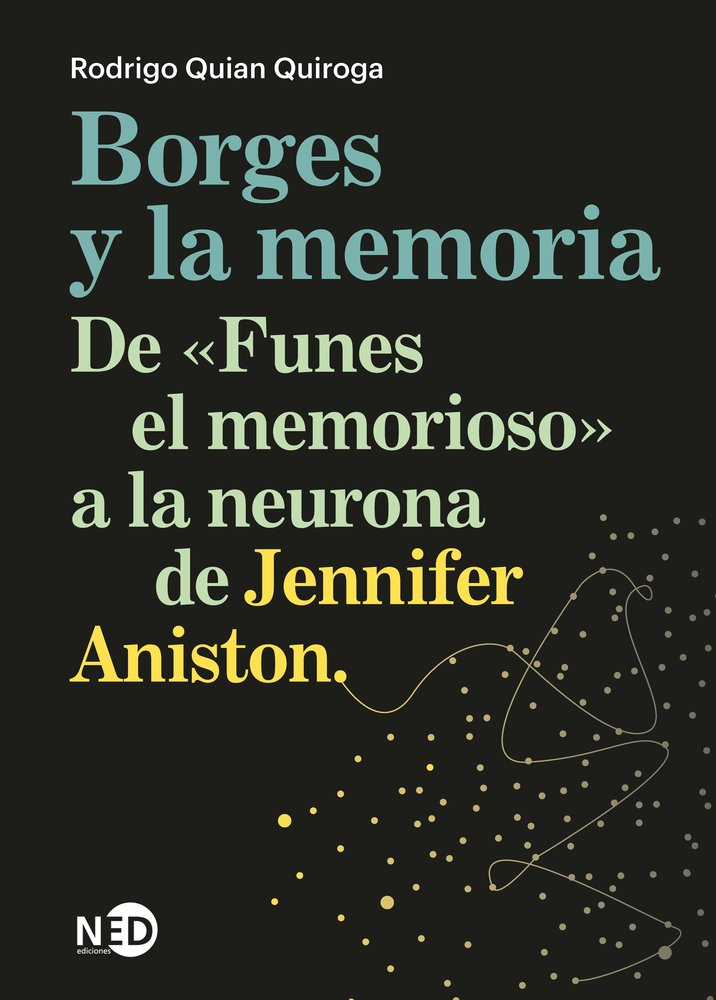
BORGES AND MEMORY (N.E.)
Book Summary
A fascinating journey into the heart of neuroscience led by one of its most brilliant researchers. Rodrigo Quian Quiroga, the neuroscientist who discovered the "Jennifer Aniston neuron," guides us through a labyrinth of fundamental questions about memory. Where are our memories stored? Is there a specific area that defines our identity? Far from offering simple answers, the author uses literary characters from Borges, real cases of prodigious minds, and famous patients to explore the mysteries of the brain, intertwining science, literature, philosophy, and art in a masterpiece of popular science.
What is it about?
The book addresses the complex issue of the localization of memory in the human brain, avoiding a simplistic answer. To do so, the author employs a unique narrative strategy that combines scientific evidence with cultural references. Through figures such as Funes the Memorious, Borges's character; Solomon Shereshevskii, a man with a prodigious memory; and the famous patient H.M., whose brain lesions revolutionized neuroscience, Quian Quiroga dissects key concepts such as Concept Cells, the relationship between memory and perception, and abstract representations. The result is a profound and engaging reflection that transcends dry scientific exposition to delve into philosophy, history, and art.
Main themes
- Nature and localization of memory in the human brain.
- The discovery and functioning of "Concept Cells" or "Jennifer Aniston neurons."
- The relationship between memory, perception, and abstract representations.
- Analysis of extraordinary cases of memory (prodigious and pathological) such as those of H.M. and Solomon Shereshevskii.
- Intersection between neuroscience, Borgesian literature, philosophy, and art.
- The philosophical question of personal identity and how what we remember defines us.
Who is it recommended for?
This book is aimed at a broad and curious audience, especially those passionate about neuroscience, psychology, and the functioning of the human mind. It will also be of great interest to literature readers, particularly admirers of Jorge Luis Borges, as well as those who enjoy essays that cross the borders between science and the humanities. No prior knowledge of neuroscience is required, as the work is conceived as accessible and entertaining popular science.
What this book offers
- A clear and engaging understanding of the most advanced concepts regarding memory and neurons, explained by a top-tier scientist.
- A unique perspective that connects neuroscience findings with literature, philosophy, and art, enriching the reflection on the human condition.
- Knowledge of fascinating cases in the history of neurology that illustrate the limits and capabilities of our memory.
- An invitation to rethink the relationship between memory, identity, and the perception of reality.
Technical specifications
- Author: QUIAN QUIROGA, RODRIGO
- Publisher: Ned Ediciones
- Language: Spanish
- Subject: NEUROSCIENCE
- Collection: HUELLAS Y SEÑALES
- Binding: Paperback
- Publication date: March 2025
- Number of pages: 240
- Weight: 320 g
Editorial review
An exceptional work of popular science that achieves the difficult balance between academic rigor and narrative appeal. Rodrigo Quian Quiroga demonstrates an enormous ability to make complex concepts of current neuroscience accessible, using literature and real cases as a guiding thread. For the reader interested in the human mind, this book not only informs but also stimulates curiosity and reflection, becoming a reading that is as instructive as it is enjoyable.