

Description
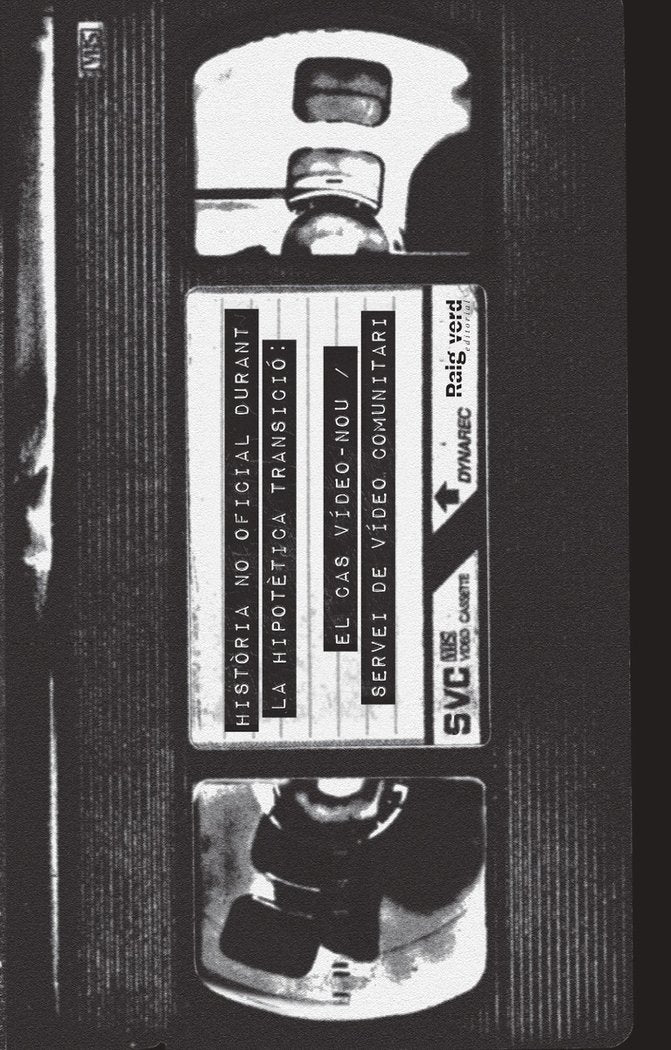
THE VIDEO-NOU / SERVEI DE VÍDEO COMUNITARI CASE
Book Summary
This essay analyzes the role of the audiovisual collectives Video-Nou and Servei de Vídeo Comunitari during the Spanish Transition (1975-1983), from a perspective critical of the official narrative. Daniel Gasol examines how these groups of non-specialist workers documented realities silenced by hegemonic media, offering a counter-narrative rooted in anarcho-syndicalism. The work invites a rethinking of the contemporary legacies of that period and the mechanics of a culture that, according to the author, prioritized aesthetics over ethics. A rigorous study for those seeking to understand the struggles for communication and historical memory from the margins.
What is it about?
The book focuses on the experience of Video-Nou and the Servei de Vídeo Comunitari, two collectives that, between 1975 and 1983, used video as a political and social tool. Facing a Transition that constructed the fiction of a democracy in the service of the nation and the economy, these groups documented stories absent from dominant media (television and press), which were controlled by institutional power. Through a case study centered on anarcho-syndicalist ideology, Gasol dismantles the official history and posits how these community communication practices challenged the hegemonic narrative. The work not only reconstructs that period but also reflects on the contemporary legacies of those struggles and the mechanics of a culture that proposed an aesthetic devoid of ethics.
Main Themes
- Critique of the official narrative of the Spanish Transition as social engineering.
- Community video as a tool for counter-information and political resistance.
- Anarcho-syndicalist ideology in non-specialized audiovisual production.
- The instrumentalization of mass media by economic and national power.
- Contemporary legacy of the struggles for memory and alternative communication.
Who is it recommended for?
This book is aimed at researchers, students, and readers interested in the critical history of the Spanish Transition, social movements, alternative communication, and anarchism. It is also of great value to audiovisual professionals, cultural activists, and anyone who questions official accounts regarding the construction of democracy in Spain.
What this book contributes
- A non-hegemonic vision of the Transition, centered on actors and collectives marginalized by the official narrative.
- A detailed analysis of the use of video as a tool for documentation and political struggle.
- Keys to understanding the power mechanics that operated in the construction of culture and communication.
- A reflection on how past practices challenge current debates on memory and democracy.
Technical Data
- Author: Daniel Gasol
- Publisher: Raig Verd
- Language: Catalan
- Subject: Regional and national history, social issues and processes, politics and government
- Collection: Fora de Col·lecció
- Publication Date: March 2024
- Number of pages: 480
- Weight: 1129 g
Editorial Review
A necessary work for those who wish to delve into the silenced narratives of the Transition. Gasol combines documentary rigor with a critical gaze that goes beyond conventional academic frameworks. The book offers a unique opportunity to rethink the relationship between communication, power, and memory through the experience of collectives that committed to a political ethic in their audiovisual practice. Recommended for readers willing to question established narratives and explore the roots of community communication in Spain.