
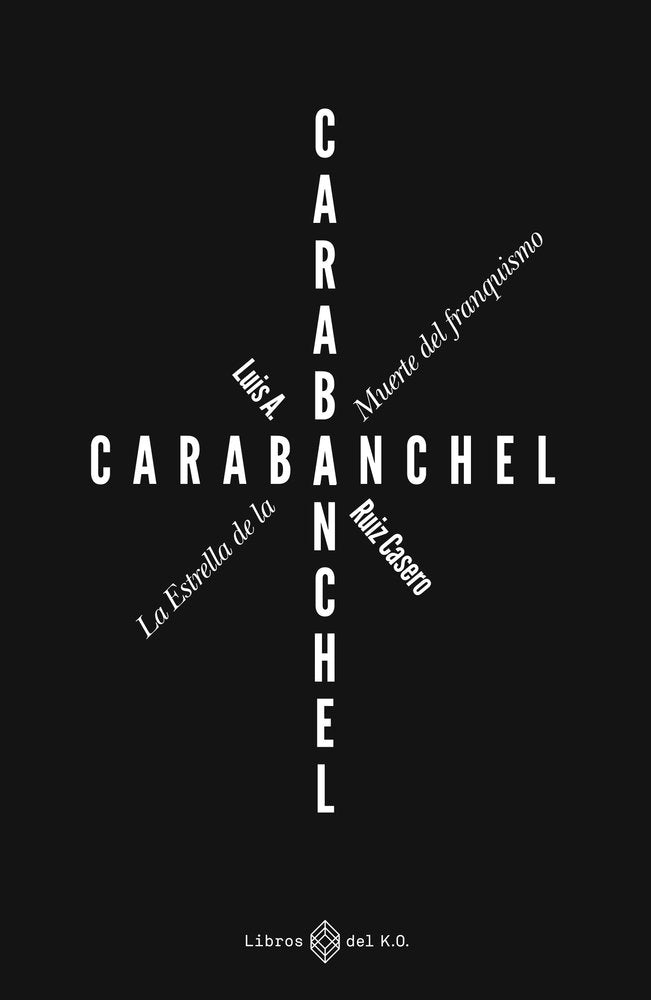

Description
Carabanchel. The Death Star of Francoism
Book Summary
This historical essay reconstructs the complete biography of Carabanchel Prison, from its construction in 1940 using enslaved Republican labor to its demolition in 2008. Historian Luis A. Ruiz Casero, supported by the Platform for the Carabanchel Prison Memory Center, manages to overcome a "documentary holocaust" to offer a general history of this painful heritage. The reader will find a detailed analysis of the oppressive mechanisms of the Franco regime, the daily life of the prisoners, the role of women, methods of torture, forms of resistance, and escape attempts, all narrated with rigor and an enviable capacity to bring history to life.
What is it about?
The book delves into the history of the largest and most overcrowded prison of the post-war Spanish period, conceived as the flagship of Francoist repression. Ruiz Casero not only documents the panoptic design and the succession of abuses that turned it into the "Death Star," but also recovers the memory of its protagonists. Aspects addressed include the construction of the prison by Republican inmates, the crucial importance of the prisoners' wives, the profiles of the most terrible torturers, the prisoners' strategies for unity and resistance, the ingenuity used to say goodbye to those condemned to death, the formation of the COPEL (Coordinator of Prisoners in Struggle), and the continuous escape attempts, some of which were successful. The work culminates with the process of closure, abandonment, and demolition of the building in 2008, which resulted in the loss of most of its archives.
Main Topics
- Penitentiary repression during the Franco dictatorship and the Transition.
- Prison architecture and panoptic design as a tool of control.
- Daily life, resistance, and solidarity among political and common prisoners.
- The role of women in the prison environment as support systems and activists.
- Historical memory, uncomfortable heritage, and the struggle for documentary preservation.
- Social and cultural history of 20th-century Spain through an iconic space.
Who is it recommended for?
This book is aimed at readers interested in the contemporary history of Spain, historical memory, studies on Francoist repression, and the penitentiary system. It will also be of great value to researchers, students of history and social sciences, as well as anyone who wishes to understand how a building can encapsulate six decades of Spanish society, from the dictatorship to democracy. It is an essential read for those seeking a rigorous, well-documented work that moves away from official narratives about the recent past.
What this book offers
- An exhaustive reconstruction of the history of Carabanchel despite the loss of its original archives.
- A comprehensive vision that combines the regime's oppression with the daily life and resistance of the prisoners.
- The recovery of key testimonies and figures, such as the role of women and the torturers.
- A critical analysis of the Transition and the management of the memory of repressive spaces.
- A tool for understanding the roots of current Spanish society through its penitentiary past.
Technical Specifications
- Author: RUIZ CASERO, LUIS A
- Publisher: LIBROS DEL K.O, S.L.L
- Language: Spanish
- Subject: LITERARY ESSAYS, SOCIAL AND CULTURAL HISTORY
- Collection: NON-FICTION
- Binding: Paperback
- Edition date: March 2025
- Number of pages: 264
- Weight: 345 g
Editorial Assessment
This is a reference work for understanding the history of the prison that best symbolizes Francoist repression. The author demonstrates exceptional rigor in reconstructing a narrative fragmented by the loss of archives, offering a story that is both academic and deeply human. The book stands out for its ability to connect the macro-history of the regime with the micro-history of the prisoners, their families, and their executioners. It is a necessary and revealing read that, as National Essay Prize winner Alfredo González-Ruibal points out, helps us understand where we come from and where we are.