
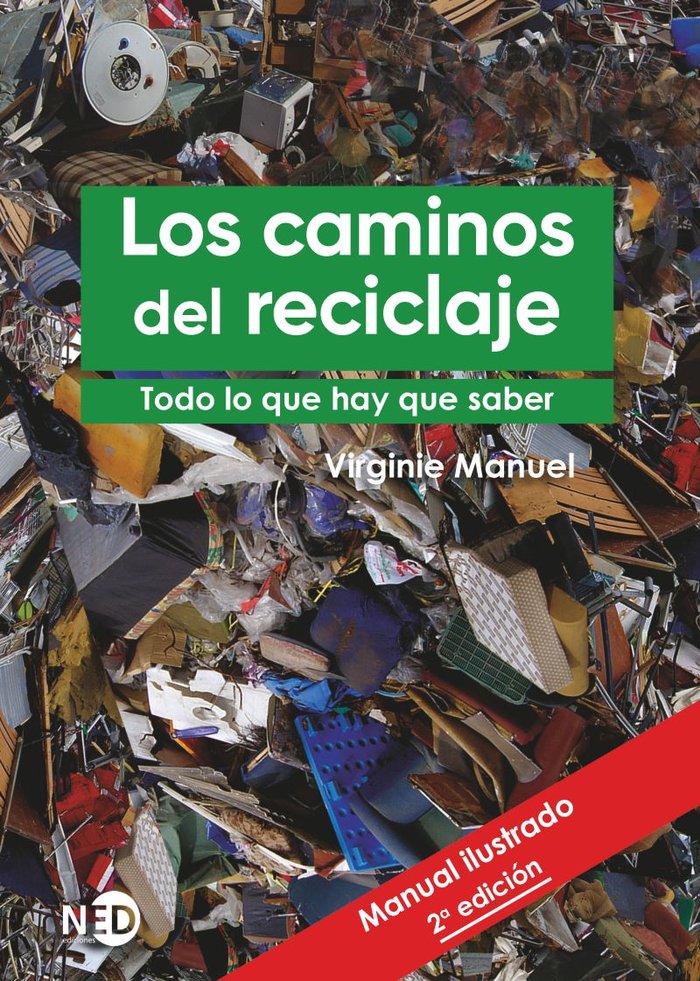

Description
THE PATHWAYS OF RECYCLING
Book Summary
This book is a practical and visual guide to understanding the complete life cycle of the waste we generate in our daily lives. From the impact of overproduction to the final destination of our waste, the work offers a clear diagnosis of the current ecological crisis and presents the various recycling routes as a necessary solution. With a didactic and accessible approach, the reader will discover how material treatment processes work, what happens to household trash, and how we can contribute to reducing pollution and saving non-renewable resources.
What is it about?
The work starts from an urgent premise: to raise awareness of the impact of our consumption on the ecosystem. To do this, it analyzes the chain that goes from the production of goods to waste management, denouncing the uncontrolled waste of resources. Next, the book delves into the different pathways of recycling, following the trail of waste from the home to treatment plants. It explains, depending on the type of material, the processes necessary to manage the mountains of waste we generate. The content is supported by visual tools such as technical data sheets for materials, diagrams, infographics, comparative charts, and a glossary, designed to facilitate the understanding of recycling cycles and their environmental impact.
Main Topics
- Applied ecology and waste management.
- Environmental impact of consumption and overproduction.
- Waste treatment and disposal processes.
- Recyclability of common materials (plastics, glass, paper, metals, etc.).
- Strategies to reduce pollution and save non-renewable resources.
Who is it recommended for?
It is aimed at anyone interested in the environment, sustainability, and waste management. It is especially useful for environmental science students, professionals in the ecology or waste management sector, educators looking for teaching materials, and conscious consumers who wish to understand the cycle of their waste and how to act more responsibly.
What this book provides
- A clear and well-founded diagnosis of the ecological impact of current consumption.
- A detailed explanation of the different recycling processes according to material.
- Visual tools (data sheets, infographics, and diagrams) that facilitate the understanding of complex concepts.
- Practical knowledge to identify the recyclability of everyday products.
- A critical and constructive perspective on how recycling can mitigate the waste crisis.
Technical Specifications
- Author: Virginie Manuel
- Publisher: Nuevos Emprendimientos Editoriales S.L.
- Language: Spanish
- Subject: Applied ecology, waste management, waste treatment and disposal
- Collection: Proyecto Natur
- Binding: Paperback
- Publication date: July 2021
- Number of pages: 288
- Weight: 500 g
Editorial Review
This is a reference work within its collection, which combines informative rigor with a visual presentation designed for popularization. Its practical and structured approach makes it a useful tool for both the general reader and the specialist looking for concrete data on the recyclability of materials. It is a book that invites reflection and provides the necessary knowledge to make informed decisions about consumption and waste management.