
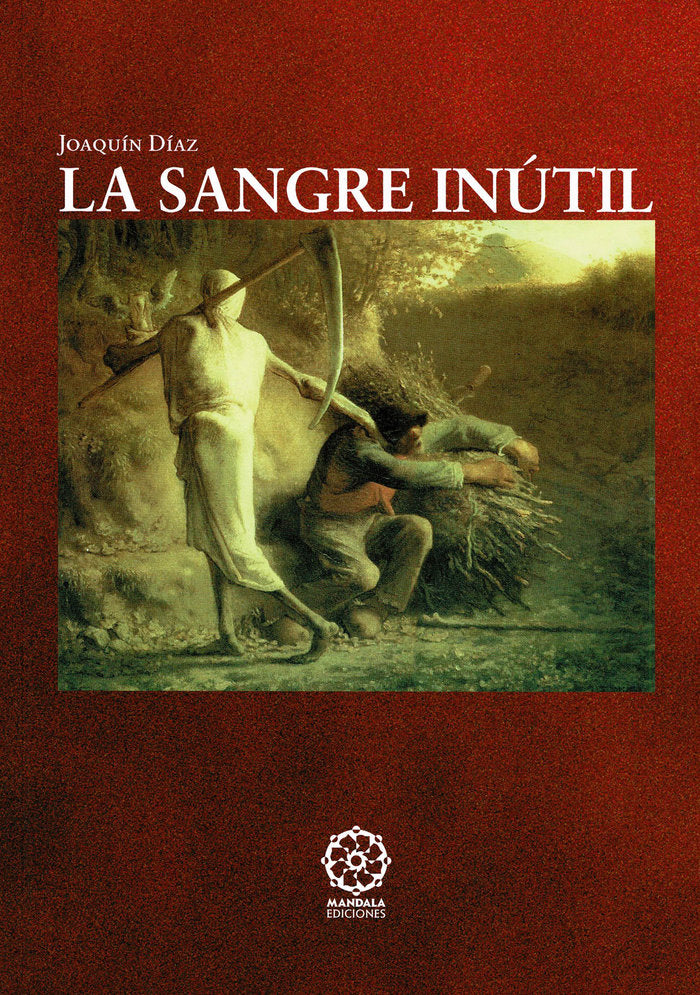

Description
THE USELESS BLOOD
Book summary
In The Useless Blood, Joaquín Díaz immerses us in an intimate and moving journey through family memories. Starting with his father's request to burn some old folders, the author delves into the story of his grandfather Nicanor and his uncle Paco, figures barely known in his childhood. This work is an exploration of the invisible bonds that tie us to the past, a reflection on memory and the weight of untold stories. The reader will find a narrative that combines personal inquiry with the reconstruction of a family legacy, revealing how the secrets of yesterday shape our present identity.
What is it about?
The work begins with a seemingly simple act: the author is tasked by his father with destroying some folders full of letters. However, what starts as a domestic chore transforms into a profound immersion in the past. Moved by curiosity and respect, Joaquín Díaz examines the contents of those documents that had until then remained alien to him. Through them, he reconstructs the figure of his grandfather Nicanor, whom he barely knew in his old age, and that of his uncle Paco, a fascinating and almost unknown character whose presence was always monitored by his mother. The narrative moves between the author's present and events from the past, unveiling the circumstances that surrounded these men and how their lives intertwine with his own. It is a tale about the discovery of roots and the complexity of family relationships.
Main themes
- Family memory and the reconstruction of the past through documents and recollections.
- The legacy of previous generations and its silent influence on the present.
- Secrets and untold stories within the family unit.
- The figure of the "stranger" within the family, represented by Uncle Paco.
- The confrontation between the childhood perception of relatives and adult reality.
Who is it recommended for?
This book is aimed at readers interested in non-fiction literature and personal memoirs, especially those who enjoy stories that explore identity and family ties. It is also an ideal read for those who appreciate intimate and reflective narratives, where everyday objects, such as letters, become gateways to the past. It is perfect for anyone who has felt curiosity about the history of their own ancestors or who is looking for a work that combines emotion with historical inquiry.
What this book offers
- An honest and emotional perspective on how small gestures can reveal great family stories.
- The opportunity to reflect on the importance of knowing our roots to understand ourselves.
- A narrative that demonstrates how the act of remembering and writing can serve as a tribute to those who preceded us.
- A look at the complexity of human relationships within the family sphere, without idealizations.
- A reading experience that invites introspection and dialogue about one's own past.
Data sheet
- Author: Díaz, Joaquín
- Publisher: Mandala Ediciones
- Language: Spanish
- Subject: Memoirs, modern and contemporary fiction
- Collection: CABAL
- Binding: Paperback
- Edition date: Not specified
- Number of pages: 178
- Weight: 348 g
Editorial review
The Useless Blood is a work that stands out for its sincerity and its ability to turn a domestic event into a literary exploration of great depth. Joaquín Díaz succeeds in weaving a narrative that, starting from the personal, reaches universal resonances. The book is presented as a solid option for those readers looking for a slow and reflective read, far from the frantic pace of conventional fiction. Its value lies in the authenticity of the author's voice and in the way it addresses the complexity of blood ties, offering a reading experience that, without a doubt, will leave a mark on those who delve into its pages.