
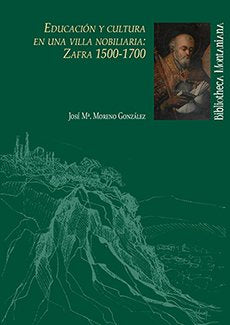

Description
EDUCATION AND CULTURE IN A NOBLE TOWN
Book Summary
This work dismantles the myth of the Extremaduran cultural wasteland by reconstructing the vibrant intellectual life of Zafra during the 16th and 17th centuries. The reader will discover a noble town where teachers, tutors, and booksellers wove an active educational and cultural network. Through a detailed analysis, the text explores everything from private libraries and the book trade to the theatrical performances that enlivened neighborhood life, offering a renewed and profound vision of the cultural heritage of the Golden Age in a rural, noble setting.
What is it about?
The study focuses on the town of Zafra during the 16th and 17th centuries, a period of cultural splendor frequently ignored in Extremaduran historiography. The author analyzes the town's cultural ecosystem, beginning with the work of teachers and tutors who practiced the art of education within its urban fabric. The role of the bookseller as a provider of precious merchandise is examined, and the libraries that treasured volumes are reconstructed, evidencing the existence of an active reading community. The work is not limited to the literary sphere but also addresses popular enjoyment through theatrical performances, integrating these phenomena into the historical and social developments of the town. All of this forms a complex and nuanced portrait of a society where education and culture were fundamental pillars.
Main Topics
- History of education in Golden Age Spain, with a focus on the noble, rural setting.
- The book trade and the formation of private libraries in 16th and 17th-century Extremadura.
- Cultural life in a noble town: theater, reading, and intellectual sociability.
- The role of teachers, tutors, and booksellers as cultural agents in the periphery.
- Historiographical revision of the myth of the Extremaduran "cultural wasteland."
Who is it recommended for?
This book is intended for historians, scholars of Golden Age literature, specialists in the history of education and culture, as well as any reader interested in the social history of Extremadura or the intellectual life of noble towns during the Early Modern period.
What this book contributes
- Rigorous research that refutes the trope of Extremaduran cultural isolation.
- A detailed analysis of the educational system and the circulation of knowledge in a specific local context.
- The reconstruction of networks of intellectual sociability and cultural consumption (reading, theater).
- An original contribution to the history of the book and libraries in Habsburg Spain.
Technical Specifications
- Author: Moreno González, José María
- Publisher: University of Huelva
- Language: Spanish
- Topic: Literature: history and criticism, literary studies: c. 1500-c. 1800
- Collection: Bibliotheca Montaniana
- Binding: Paperback
- Publication Date: Not available
- Number of pages: 588
- Dimensions: Not available
- Weight: 1463 g
Editorial Assessment
This is a reference work for those seeking a profound and well-documented analysis of cultural life in Early Modern Extremadura. Its value lies in the ability to reconstruct, based on primary sources, a rich and complex social and intellectual fabric, offering a perspective that enriches and nuances the cultural history of the Spanish Golden Age. It is an essential read for academics and enthusiasts of rigorous local history.