
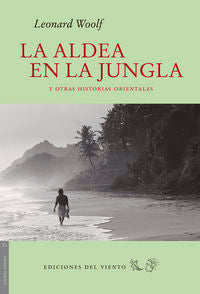

Description
The Village in the Jungle
Book Summary
This edition brings together for the first time in Spanish Leonard Woolf's eponymous novel, along with three short stories set in Ceylon (present-day Sri Lanka). The work is a raw and poetic portrait of the life of a Sinhalese community trapped between ancestral tradition and the oppression of the British colonial system. Through the eyes of its characters, the reader discovers a world of superstition, debt, violence, and resistance, narrated with restrained prose and psychological depth that places it among the great novels about 20th-century colonialism.
What is it about?
The novel follows the life of a humble Sinhalese family in a remote village in the Ceylonese jungle. The father, Silindu, is a solitary hunter who barely manages to survive alongside his wife and two daughters, Punchi Menika and Himnihami. The plot is set in motion when the greed of a local moneylender and the arrival of a new colonial official trigger a spiral of debt, violence, and dispossession. Woolf describes with ethnographic detail the customs, beliefs, and rituals of the community, but also shows how the English judicial and administrative system dismantles village life, leading its protagonists toward a tragic and inevitable fate. The three stories that accompany the novel explore, from different perspectives, the cultural clash and the loneliness of the colonizer in a hostile and fascinating environment.
Main Themes
- The destructive impact of British colonialism on rural communities in Sri Lanka.
- The tension between local religious traditions and superstitions and imposed Western rationality.
- Greed, usury, and economic inequality as drivers of personal and collective tragedy.
- The loneliness and rootlessness of the colonial official in a foreign cultural environment.
- The silent resistance and forced adaptation of native inhabitants in the face of foreign power.
Who is it recommended for?
This book is aimed at readers interested in travel literature with a historical background, fans of modern and contemporary fiction with a political consciousness, and those seeking a lucid and uncompromising vision of colonialism from the pen of an eyewitness. It is also an essential read for followers of Leonard Woolf's work and for those who wish to know the context surrounding the figure of Virginia Woolf.
What this book provides
- A unique and little-known perspective on colonialism in Ceylon, written by someone who experienced it from the inside as a colonial administrator.
- A narrative of great literary value, comparable to that of Orwell or Forster, which combines social realism with poetic sensibility.
- Access for the first time in Spanish to a fundamental work of the postcolonial canon, along with three previously unpublished stories.
- An anthropological immersion into the life and beliefs of a 19th-century Sinhalese community.
Technical Specifications
- Author: WOOLF, LEONARD
- Publisher: Ediciones del Viento, S.L.
- Language: Spanish
- Topic: MODERN AND CONTEMPORARY FICTION, TRAVEL LITERATURE
- Collection: VIENTO SIMUN
- Binding: Paperback
- Publication date: January 2015
- Number of pages: 256
- Weight: 470 g
Editorial Review
The Village in the Jungle is a work that deserves to be rediscovered. In it, Leonard Woolf demonstrates a narrative ability and an ethnographic eye that transcend his status as "the husband of." The novel, together with the stories that accompany it, offers a lucid and tragic vision of the encounter between two worlds, without falling into manichaeism. Its interest lies as much in its literary value as in its historical testimony, making it an essential read for those who wish to understand the complexities of the British Empire from an intimate and human perspective.