

Description
THE LIVING HOUSE
Book Summary
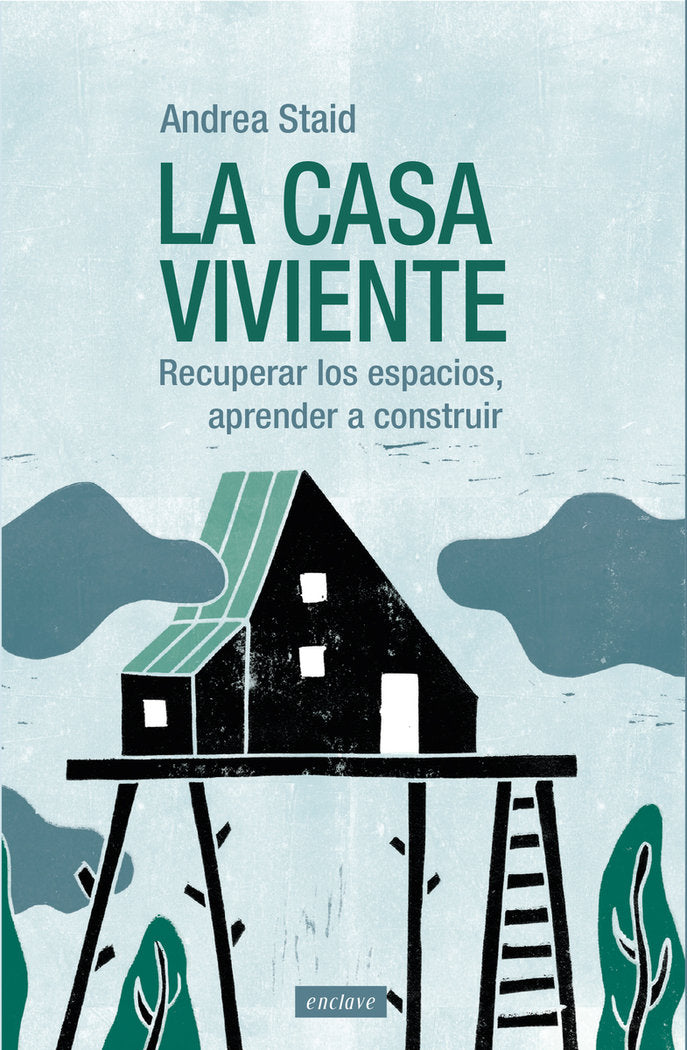
A fascinating journey around the world to rediscover the deeper meaning of inhabiting. Andrea Staid invites us to reflect on the house not as a simple shelter, but as a living organism in constant dialogue with its environment. From stilt houses in Myanmar to self-built dwellings in the West, the author explores how different cultures understand the home as a dynamic, sustainable, and deeply human space. A work that connects anthropology with the ecological urgency of our time.
What is it about?
The work begins with an essential question: what does it really mean to inhabit? Through an ethnographic journey that goes from the Peruvian Andes to the mountains of India, passing through Vietnam and Mongolia, the author documents how different communities understand housing as a living entity that ages, breathes, and requires care. On Inle Lake in Myanmar, bamboo stilt houses need constant inspection; in the mountains of Laos, floor beams age and demand attention. But the journey does not end in the exotic: the book returns to our societies to show how the consciousness of inhabiting more ecologically is growing, giving rise to experiences of self-construction and new ways of understanding the home.
Main themes
- Anthropology of inhabiting and housing as a living organism
- Ecological sustainability and relationship with the natural environment
- Self-construction and new ways of inhabiting in the contemporary world
- Cultural diversity in the conception of home and daily life
- The return from the journey and the application of traditional knowledge to urban contexts
Who is it recommended for?
This book is aimed at readers interested in anthropology, sustainable architecture, ecology, and alternative ways of life. Also to those seeking a deep reflection on the meaning of home beyond design and functionality, as well as to travelers and professionals in urbanism and municipal planning who wish to understand other ways of relating to inhabited space.
What this book offers
- An anthropological gaze that strips housing of its static character to understand it as a living process
- Concrete examples of communities that integrate sustainability and tradition in their way of inhabiting
- A reflection applicable to the Western context on how to build and live more ecologically
- Conceptual tools to rethink the relationship between the human being, their home, and the natural environment
Technical specifications
- Author: Andrea Staid
- Publisher: Enclave de Libros
- Language: Spanish
- Topic: Urban communities, Anthropology, Wildlife and habitat conservation, Urban and municipal planning
- Collection: Casa de Fieras
- Binding: Paperback
- Publication date: January 2025
- Number of pages: 226
- Weight: 120 g
Editorial review
The Living House offers an original and necessary perspective at a time of growing ecological awareness. Andrea Staid successfully combines ethnographic observation with philosophical reflection on inhabiting, avoiding idealizations. The book is especially valuable for those seeking alternatives to the conventional housing model, as it presents real cases of communities that have integrated sustainability and tradition. Its accessible tone and travel-based structure make it an enjoyable read without losing anthropological rigor.