

Description
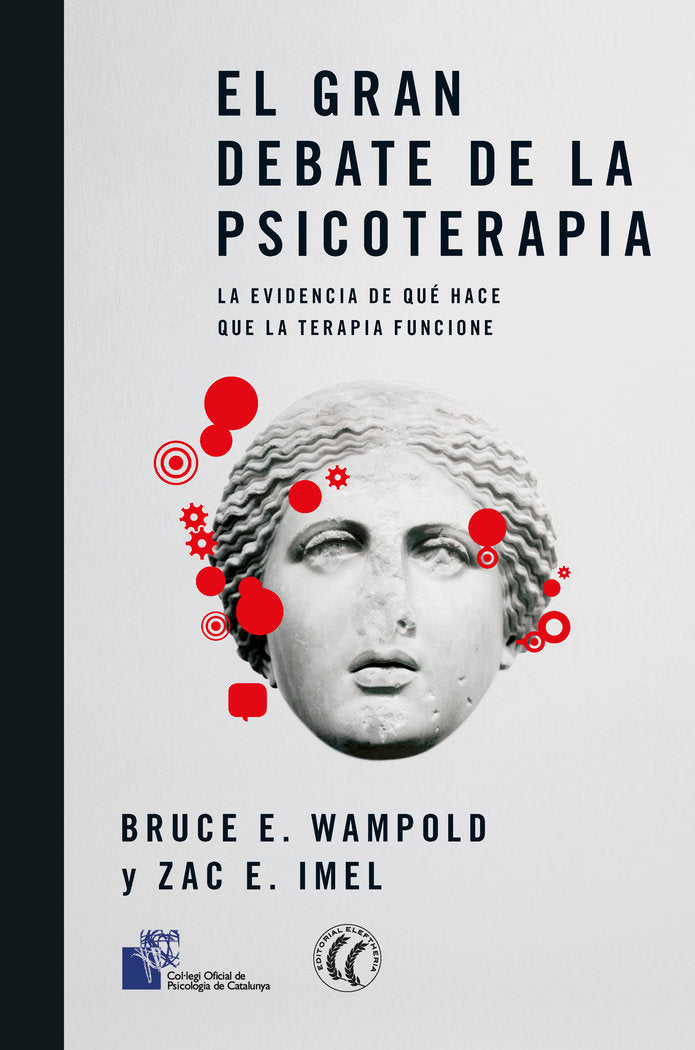
THE GREAT PSYCHOTHERAPY DEBATE
Book Summary
This work offers a critical and comprehensive analysis of the efficacy of psychotherapy, moving away from the traditional approach that seeks a specific treatment for each disorder. Bruce E. Wampold and Zac E. Imel present the contextual model, an alternative based on a scientific understanding of how human beings heal in a social setting. Through a review of the history of healing practices and a detailed study of common factors such as the therapeutic alliance, empathy, and expectations, the book unveils the hidden elements that truly determine the success of a psychological intervention. It is essential reading for professionals seeking a solid empirical foundation beyond diagnostic labels.
What is it about?
The book is structured as a critical examination of the progress of psychotherapy, focusing on the factors that are often overlooked or ignored by traditional research. The authors argue that the obsession with identifying the most effective treatment for a specific disorder (specific ingredients) is limited. Instead, they propose the contextual model, which is derived from understanding psychotherapy as a process of social healing. The work includes a review of the history of medicine and psychotherapy, an analysis of how the therapist's role influences outcomes, and a detailed exploration of research on common factors such as the therapeutic alliance, patient expectations, and empathy. This second edition updates and expands the contextual model, offering a more complete vision of why psychotherapy works.
Main Topics
- Contextual model of psychotherapy: an alternative to the traditional medical model.
- Common factors in psychotherapy: therapeutic alliance, expectations, empathy.
- Therapist effects and their influence on treatment outcomes.
- History of healing practices and their evolution toward modern psychotherapy.
- Critique of research focused exclusively on specific ingredients for specific disorders.
Who is it recommended for?
It is aimed at clinical psychologists, psychiatrists, psychotherapists, and advanced psychology students who wish to delve into the scientific basis of therapeutic practice. It is also of great interest to psychology researchers and mental health professionals seeking to understand the mechanisms underlying the efficacy of psychotherapy beyond specific techniques.
What this book offers
- A solid empirical foundation for understanding why psychotherapy is effective, beyond diagnostic labels.
- A critical and updated view of psychotherapy research, debunking myths about specific treatments.
- Conceptual tools to improve clinical practice, focusing on the alliance, empathy, and patient expectations.
- A theoretical framework (contextual model) that integrates science with clinical practice in a rigorous way.
Technical Specifications
- Author: WAMPOLD, BRUCE E.; IMEL, ZAC E.
- Publisher: EDITORIAL ELEFTHERIA SL
- Language: Spanish
- Subject: PSYCHOLOGICAL THEORY AND SCHOOLS OF THOUGHT
- Collection: ELEFTHERIA
- Binding: Paperback
- Publication date: June 2021
- Number of pages: 528
- Weight: 800 g
Editorial Assessment
This work stands as an essential reference for those seeking a deep, data-driven understanding of psychotherapeutic efficacy. Wampold and Imel's proposal is intellectually rigorous and challenges established paradigms, offering a useful framework for both research and daily clinical practice. Their focus on common factors and the relational context of therapy provides a valuable and necessary perspective in a field often dominated by technique. It is, without a doubt, a thought-provoking read that enhances professional practice.