
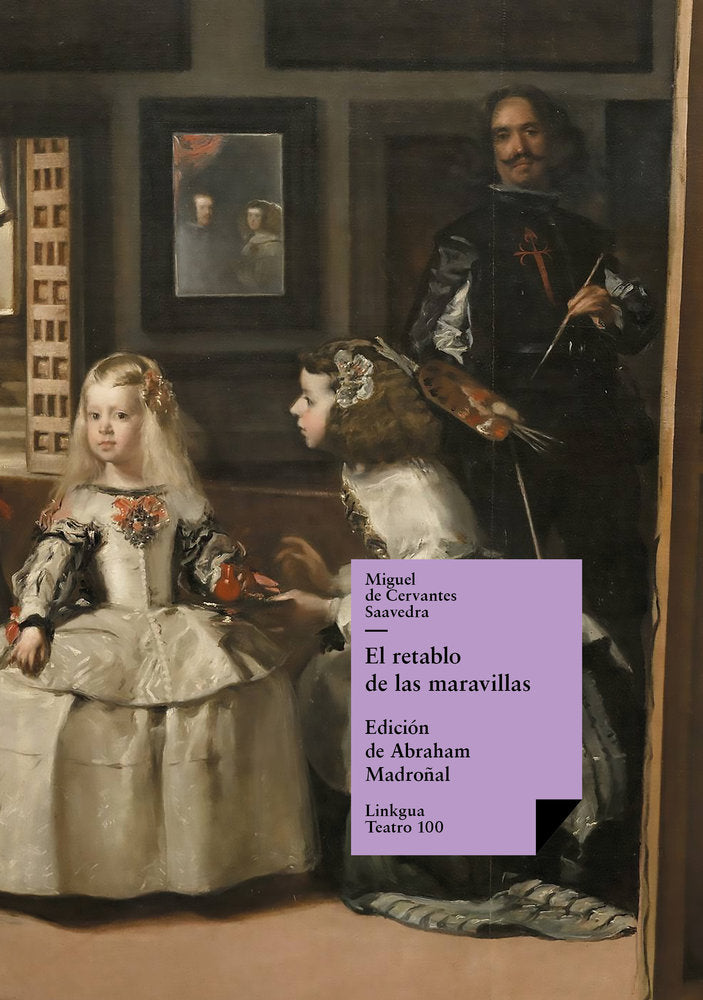

Description
The Wondrous Puppet Show
Book summary
This short play by Miguel de Cervantes is an interlude that combines wit, social criticism, and humor. In it, two rogues, Chanfalla and Chirinos, arrive in a town and convince its inhabitants that they possess a magic puppet show that can only be seen by those who are legitimate children of "old Christian" blood. Fear of what others might say and social hypocrisy unleash a comedy of errors where no one wants to admit they see nothing, fearing they will be singled out. Cervantes uses this farce to satirize the prejudices of blood purity and the false honor of his time, offering the reader a scathing and timeless reflection on collective deception.
What is it about?
The plot begins when Chanfalla and his partner Chirinos, two traveling con artists, arrive in a town and announce a prodigious spectacle: a puppet show whose figures are only visible to those who are legitimate children and old Christians, without any mixture of Jewish or Moorish blood. The gullible and fearful inhabitants of the town, including the Governor, the Mayor, and other notables, accept the performance so as not to cast doubt on their lineage. As the rogues pretend to describe the wonders appearing in the puppet show (from Samson to mice), the spectators, out of shame and vanity, claim to see everything, generating comic and absurd situations. The play culminates when a character outside the deception, a soldier, bursts in and reveals the farce, ridiculing the credulity and pride of those present.
Main themes
- Social hypocrisy and the appearance of honor in Golden Age Spain.
- Criticism of the "purity of blood" statutes and racial prejudices.
- Collective deception and manipulation through fear of what others might say.
- Satire of authority and the gullibility of the powerful.
Who is it recommended for?
It is recommended for students of Golden Age Spanish literature, lovers of classical theater, and readers interested in Cervantes's short works beyond Don Quixote. It is also attractive to those seeking a quick read with intelligent humor and social criticism that remains relevant today.
What this book offers
- A showcase of Cervantes's comic and satirical genius in a short, accessible format.
- A reflection on how social conventions and prejudices can override individual reason.
- A key work for understanding the interlude genre and the social critique literature of the Spanish Baroque.
- An enjoyable read that combines agile dialogue with a moral about vanity and deception.
Technical specifications
- Author: Cervantes Saavedra, Miguel de
- Publisher: Linkgua Ediciones
- Language: Spanish
- Subject: CLASSIC TEXTS
- Collection: FONDO
- Binding: Paperback
- Publication date: January 2024
- Number of pages: 46
- Weight: 120 g
Editorial review
This Linkgua edition recovers an essential interlude by Cervantes, ideal for those who wish to explore his most biting theatrical facet. With only 46 pages, it offers a quick read that is dense in meaning, perfect for an introduction to the author's social criticism. Its humor and message regarding human hypocrisy make it a work that transcends its era and remains relevant to the contemporary reader interested in the classics.