

Description
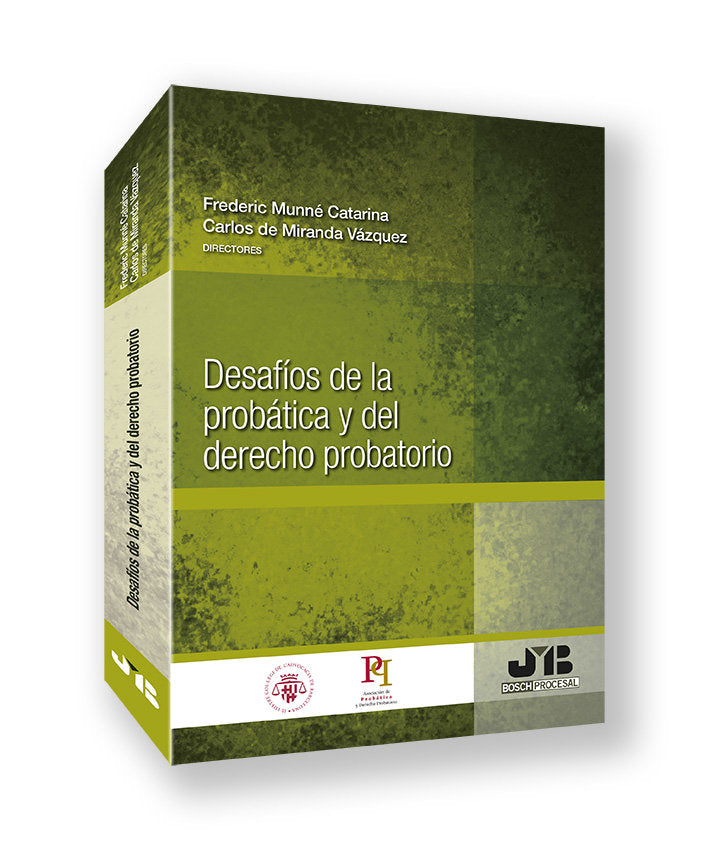
CHALLENGES IN EVIDENCE AND THE LAW OF EVIDENCE
Book Summary
This collective work offers a rigorous and up-to-date analysis of the most pressing challenges in the field of evidence and the law of evidence. Written by a roster of prominent judges, lawyers, academics, and expert witnesses, the work combines the practical perspective of the judiciary with the theoretical counterpoint of the legal profession and academia. The reader will find an update on the doctrine of the Supreme Court and an examination of emerging topics such as cognitive biases, deepfakes, online trials, and the proof of professional liability of lawyers, offering an essential synthesis for contemporary legal practice.
What is it about?
The book begins with an update on the Supreme Court's doctrine regarding evidence and the law of evidence, establishing the jurisprudential framework of reference. From there, it delves into a series of burning issues that set the current agenda for the law of evidence. It analyzes the cognitive biases that can affect judges in their assessment of evidence, as well as the impact of new technologies, such as deepfakes and their potential to distort judicial evidence. It also examines the implications of online trials on the presentation of personal evidence, the evidentiary scope of correspondence between lawyers, and the appropriate procedural treatment of minors and adolescents as a source of evidence. Finally, it addresses specific evidentiary problems in criminal proceedings and offers strategies for the selection of expert witnesses and the proof of a lawyer's professional liability.
Main Topics
- Update on the Supreme Court doctrine on evidentiary matters.
- Cognitive biases in the assessment of evidence by judges.
- Impact of deepfakes and artificial intelligence on judicial evidence.
- Issues regarding personal evidence in trials held online.
- Evidentiary value of correspondence between lawyers.
- Procedural treatment of minors and adolescents as a source of evidence.
- Strategies for the selection and appointment of expert witnesses in the process.
- Proof of a lawyer's professional liability.
- Specific evidentiary problems in criminal proceedings.
Who is it recommended for?
This work is aimed at legal professionals seeking a deep and practical update on evidentiary matters. It is especially useful for judges and magistrates, litigating lawyers, prosecutors, court clerks, as well as academics and researchers in procedural law. It is also of great interest to judicial expert witnesses and advanced law students who wish to understand the contemporary challenges of evidence.
What this book offers
- A comprehensive and updated view of the most relevant evidentiary problems in current legal practice.
- The contrast between the judicial and legal perspectives, offering a practical synthesis for litigation.
- Tools to identify and manage cognitive biases in the assessment of evidence.
- Keys to addressing technological challenges, such as deepfakes and online trials, in the field of evidence.
- Concrete strategies for choosing expert witnesses and proving professional liability.
Technical Specifications
- Author: MUNNE CATARINA, FREDERIC; DE MIRANDA, CARLOS; SEOANE SPIEGELBERG, JOSE LUIS; SANTO GARGALLO, IGNA
- Publisher: J.M.BOSCH
- Language: Spanish
- Topic: CIVIL PROCEDURE: LAW OF EVIDENCE, CRIMINAL PROCEDURE: LAW OF EVIDENCE
- Collection: BOSCH PROCESAL
- Publication date: May 2025
- Number of pages: 486
- Weight: 750 g
Editorial Assessment
This is a reference work for legal professionals who need to stay up to date with the most current challenges in the matter of evidence. The combination of judicial, forensic, and academic contributors guarantees a balanced and practical treatment of the topics, far from mere theoretical speculation. It is recommended reading for those who seek concrete tools to improve their litigation practice and understand the impact of new technologies and cognitive biases on the judicial process.