
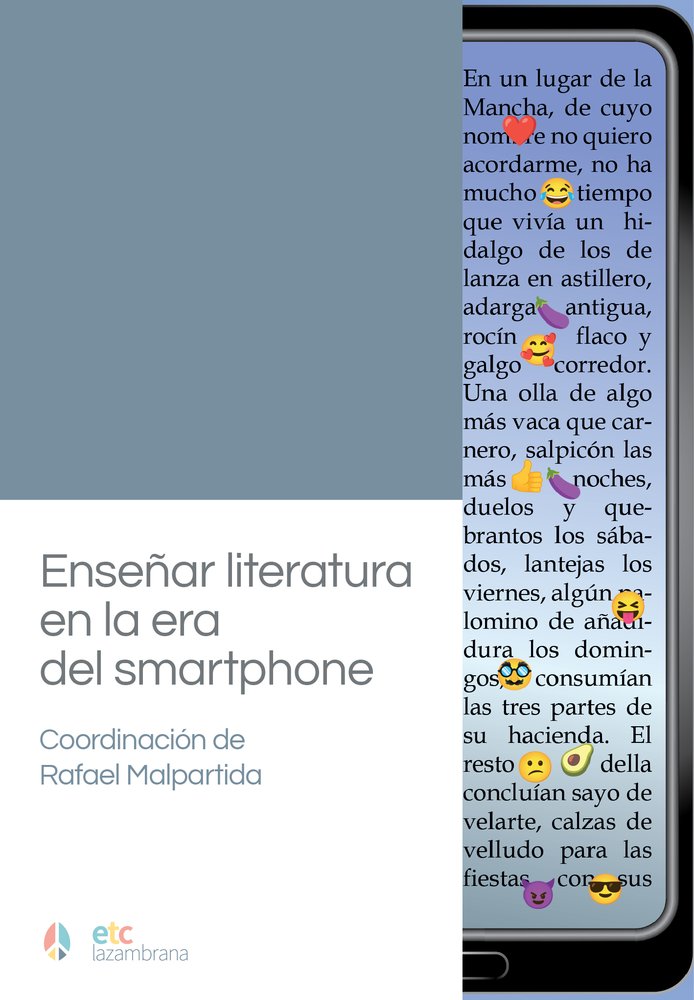

Description
Teaching literature in the age of the smartphone
Book summary
This book offers a profound and necessary reflection on how to teach literature in a context dominated by technology, immediacy, and artificial intelligence. Eight university professors share their classroom experiences, analyzing both the challenges and the opportunities that the digital age poses for the training of future philologists. The work proposes original pedagogical alternatives, from the reclaiming of in-person reading to the critical use of online resources, with the goal of preserving the value of textual interpretation and literary knowledge in the face of technological noise.
What is it about?
Starting from the realization that reading, literary history, and the capacity for textual analysis are at risk in a hyper-technologized world, this volume brings together the reflections of eight teachers who instruct university literature courses. Throughout its chapters, the authors address practical and theoretical issues: the use of laptops in the classroom, the relationship with artificial intelligence, the presence of literature on the internet and social media, and the need to combat memory-based apathy and electronic entrenchment. Proposals are presented such as reading aloud in class, reclaiming complexity in the face of algorithmic simplification, the design of flipped classrooms for Spanish literature, the return to handwriting, the selection of quality literary content on the web, and the comparison of current devices to the transistor as a distracting element in the work of Vargas Llosa. The book, although focused on university education, is extensible to secondary education, offering a lucid diagnosis and applicable solutions for forming critical readers in the age of the smartphone.
Main themes
- Pedagogy of literature in the digital and artificial intelligence context.
- Impact of the smartphone and screens on attention, memory, and reading comprehension.
- Strategies to foster deep reading and critical interpretation of texts.
- Critical use of literary resources on the internet and social media as didactic tools.
- Reclaiming complexity, handwriting, and orality in the classroom.
Who is it recommended for?
This book is aimed at literature teachers at all educational levels, especially university and secondary school, as well as students of philology, pedagogy, and educational sciences. It will also be of great interest to anyone concerned about the future of humanistic education and the place of reading in a technologized society.
What this book offers
- A realistic and well-founded analysis of the challenges of teaching literature in the digital age.
- Concrete and tested pedagogical proposals to integrate or counteract technology in the classroom.
- A reflection on how to preserve critical thinking and complexity in the face of algorithmic immediacy.
- Perspectives from various teachers that enrich the debate with diverse and complementary approaches.
- Keys to reconnecting students with the experience of literary reading.
Technical data
- Author: Malpartida, Rafael
- Publisher: El Toro Celeste
- Language: Spanish
- Topic: Literature: history and criticism, Literary studies: general, Education pedagogy
- Collection: La Cervantina
- Binding: Paperback
- Publication date: January 2026
- Number of pages: 176
- Weight: 80 g
Editorial review
This is a timely and necessary work that addresses with intellectual honesty one of the great challenges of contemporary humanistic education. The plurality of voices and approaches enriches the debate without falling into dogmatism, offering the reader practical tools and a critical look at the role of technology in the teaching of literature. A reference book for those seeking to understand and improve the training of readers and philologists in a digital environment.